
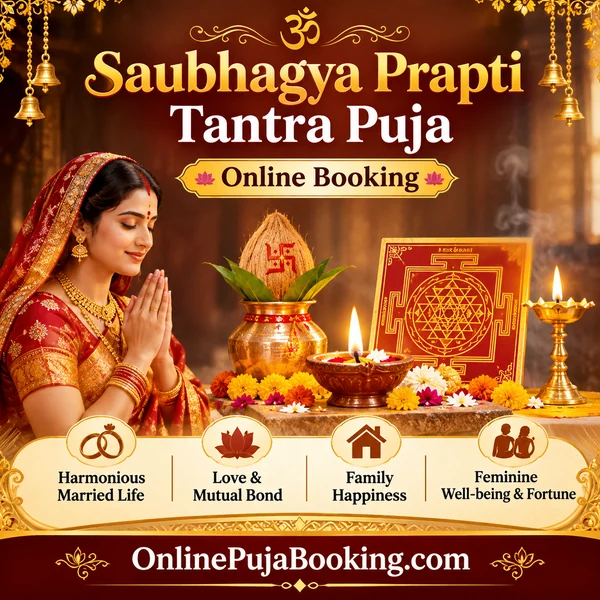

Saubhagya Prapti Tantra Puja Online Booking
Saubhagya Prapti Tantra Puja is a devotional worship service centred on prayers to the Divine Mother, or Devi Shakti, for auspiciousness, harmony, spiritual strength, and well-being. The word Saubhagya is commonly associated with good fortune, prosperity, auspicious circumstances, and a fortunate or harmonious life. Prapti means attainment or receiving.
The exact ritual known by the name “Saubhagya Prapti Tantra Puja” does not have one universally standardised procedure across all Hindu traditions. Its form may differ according to the Devi tradition, the priest conducting the worship, the devotee’s sankalpa, and the regional or family custom followed. A booking should therefore specify the actual form of Devi worship, mantra recitation, and ritual arrangements included in the selected package.
The puja is intended as a sincere act of devotion rather than a promise of a particular material result. Devotees may choose it as an opportunity to pray for auspiciousness, positive intentions, family harmony, and a stronger connection with the Divine Mother.
Religious and Cultural Significance
In Hindu Shakta traditions, the Divine Mother is worshipped as the supreme source of Shakti, the sacred power associated with creation, preservation, transformation, and the energy of life. Devi is revered in many forms, including Durga, Lakshmi, Parvati, and Tripura Sundari. Each form has its own devotional traditions, names, mantras, and methods of worship.
The idea of saubhagya has a broad meaning in Hindu religious and cultural life. It can refer to auspiciousness, well-being, prosperity, harmony in family life, and the blessings associated with a balanced household. It is not limited to one material objective or one stage of life.
A Saubhagya Prapti worship service may draw upon the wider tradition of Devi upasana, in which devotees offer flowers, light, incense, prayers, and mantra recitation to the Goddess. Depending on the chosen tradition, the ritual may include a Devi puja, a kalasha installation, a devotional sankalpa, or recitation of an established hymn.
The word Tantra has a specific meaning within Hindu religious traditions. Tantric worship can involve prescribed forms of deity meditation, mantra, ritual arrangement, and disciplined practice. It should not be confused with sensational claims or the idea that a ritual can control another person or guarantee worldly success. Certain mantra practices may require initiation or guidance within a particular lineage. The procedure offered for this booking should be explained clearly before the service is confirmed.
For this product, the central devotional theme is seeking the grace of Devi for auspiciousness and a spiritually balanced life. The exact form of the Goddess and the ritual method should be confirmed with the service provider before booking.
Sanskrit Shloka or Mantra
The following established verse from the Narayani Stuti of the Devi Mahatmya is appropriate for a Devi worship service focused on auspiciousness. It is a devotional salutation to the Goddess, not a special or exclusive mantra created for this particular product.
Shloka: Sarva Mangala Mangalye
Sanskrit:
सर्वमङ्गलमाङ्गल्ये शिवे सर्वार्थसाधिके ।
शरण्ये त्र्यम्बके गौरि नारायणि नमोऽस्तु ते ॥
Roman Transliteration:
Sarvamaṅgala-māṅgalye śive sarvārtha-sādhike |
Śaraṇye tryambake gauri nārāyaṇi namo’stu te ||
Meaning in English:
Salutations to Narayani, the most auspicious among all that is auspicious, the benevolent Goddess who is praised as the fulfiller of worthy aims, the giver of refuge, and the three-eyed Gauri.
Relevance to This Puja:
This verse expresses reverence for the Goddess as the embodiment of auspiciousness and divine grace. Its devotional meaning makes it suitable for a prayer seeking saubhagya, harmony, and spiritual well-being. It is traditionally associated with the Narayani Stuti in the Devi Mahatmya.
Simple Devi Mantra
Sanskrit:
ॐ दुं दुर्गायै नमः ॥
Roman Transliteration:
Om Dum Durgayai Namah.
Meaning in English:
Salutations to Goddess Durga, the Divine Mother who is revered as a source of strength and protection.
Relevance to This Puja:
This is a widely used devotional mantra to Goddess Durga. It may be included when the selected puja follows a Durga-oriented form of Devi worship. The mantra count and method should follow the priest’s customary practice and any relevant lineage guidance.
Traditional Purpose and Devotional Benefits
Devotees may undertake Saubhagya Prapti Tantra Puja with the following traditional spiritual intentions:
- Prayer for auspiciousness: To seek the grace of Devi for mangala and favourable circumstances in life.
- Family harmony: To offer prayers for mutual understanding, affection, and a peaceful household.
- Spiritual strength: To cultivate courage, devotion, patience, and confidence through worship of the Divine Mother.
- Positive intentions: To express sincere prayers for personal and family well-being through a formal sankalpa.
- Prosperity and well-being: To seek divine blessings for responsible progress, stability, and contentment.
- Devotional discipline: To spend time in prayer, mantra recitation, and reflection.
- Gratitude and surrender: To express thankfulness and place one’s hopes and concerns before the Goddess.
These are traditional devotional intentions and religious beliefs. They should not be understood as scientifically established effects or guaranteed outcomes. A puja cannot promise wealth, marriage, employment, control over another person, or a specific change in circumstances.
When Is This Puja Performed?
There is no single universally mandatory date for a ritual sold under the name Saubhagya Prapti Tantra Puja. The appropriate timing depends on the form of Devi worship selected and the customs followed by the priest or religious tradition.
Some devotees prefer to arrange Devi worship on:
- Fridays: Traditionally associated with worship of the Goddess in many Hindu households.
- Navratri: Chaitra Navratri and Sharad Navratri are important periods of Devi worship.
- Ashtami and Navami: These lunar days have an important place in several Devi worship traditions.
- Purnima: Some devotees choose the full-moon day for prayer and devotional observances.
- Personal auspicious occasions: A family may request the puja before a new beginning or during a period of personal prayer.
These are possible occasions, not compulsory dates for every version of this puja. The preferred date should be discussed during booking. If a particular tantric lineage prescribes a specific day, the priest should explain that requirement before the booking is confirmed.
Who Can Book This Puja?
Saubhagya Prapti Tantra Puja may be considered by:
- Individuals: Devotees wishing to pray for auspiciousness, inner strength, and personal well-being.
- Married couples: Those who wish to offer prayers for affection, mutual respect, and harmony in married life.
- Families: Households seeking a shared devotional occasion for peace and well-being.
- Women devotees: Those who wish to participate in traditional Devi worship and pray for saubhagya and family welfare.
- Householders: People who want to include a formal Devi puja in their regular religious observances.
- Devi devotees: Individuals who follow Shakta traditions or have a personal devotional connection with a form of the Divine Mother.
The ritual should be performed with respect for the relevant tradition. If a particular mantra practice requires initiation, eligibility, or specific preparation, those details should be discussed with the priest beforehand. Devotees should never feel pressured to undertake a restricted practice or purchase an additional ritual.
Puja Vidhi: How the Ritual Is Traditionally Performed
The precise procedure for Saubhagya Prapti Tantra Puja can vary. The following is a general outline of a Devi-oriented devotional puja. It is not a claim that every priest or tradition follows an identical sequence.
1. Preparation of the Puja Space
The worship area is cleaned and arranged respectfully. A suitable place is prepared for the image, picture, or symbolic representation of the Goddess. A clean cloth, puja vessels, flowers, and other required materials may be arranged.
2. Sankalpa
The devotee or the person arranging the puja expresses the intention for which the worship is being performed. The sankalpa may include the devotee’s name and family details, as well as a prayer for auspiciousness and well-being.
3. Invocation and Preliminary Prayers
The priest may begin with customary preliminary prayers and invocations. Depending on the tradition, this can include Ganapati worship and prayers for the peaceful and orderly completion of the ritual.
4. Kalasha Sthapana, Where Prescribed
Some forms of Devi worship include the installation of a kalasha, a sacred vessel representing auspicious presence. Water, leaves, and other traditional items may be used according to the selected procedure.
5. Devi Avahana and Worship
The Goddess is respectfully invoked according to the chosen form of Devi upasana. The priest offers customary items such as flowers, sandalwood paste, kumkum, incense, a lamp, and devotional offerings.
6. Mantra Recitation or Stotra Path
The priest may recite an appropriate Devi mantra, hymn, or stotra. The chosen mantra, number of repetitions, and method should be established by the priest according to the tradition being followed. A general Devi mantra should not be represented as a secret or initiated tantric mantra.
7. Archana and Offerings
Flowers, kumkum, or other suitable offerings may be presented while reciting the names of the Goddess. The form of archana depends on the deity and the selected ritual.
8. Havan, If Included in the Package
Some versions may include a fire ritual. When a havan is part of the selected service, the priest performs it according to the relevant procedure, using suitable offerings and mantras. A havan should not be assumed to be included in every puja package.
9. Aarti and Prarthana
The ritual may conclude with aarti and prayers expressing gratitude, devotion, and the devotee’s wishes for auspiciousness and well-being.
10. Prasad and Closing Prayers
Prasad may be offered or distributed according to the arrangements. The priest completes the customary closing prayers and explains any remaining observances to the devotee.
The actual sequence may differ by regional custom, sampradaya, priest, and selected package. Any specialised tantric procedure should be explained in advance and performed only within the appropriate religious tradition.
Puja Samagri
The materials required depend on the selected form of Devi worship and whether the package includes a havan. Common items for a simple Devi puja may include:
- A picture or murti of the chosen form of Devi.
- A clean puja cloth and worship platform.
- Flowers and flower garlands.
- Kumkum, turmeric, and sandalwood paste.
- Incense sticks and a diya with suitable oil or ghee.
- Camphor for aarti.
- Fruits and customary naivedya.
- Betel leaves and nuts, where prescribed.
- Kalasha, water, and mango leaves, if required.
- Rice or akshata.
- Havan kund, samidha, ghee, and havan offerings, if havan is included.
This is an indicative list, not a fixed mandatory samagri list. Customers should confirm whether the puja materials, havan arrangements, flowers, offerings, and prasad are included in their chosen package or need to be arranged separately.
Why Book Through OnlinePujaBooking.com?
OnlinePujaBooking.com provides an online way to explore puja services and communicate booking requirements before making arrangements. For a specialised service such as Saubhagya Prapti Tantra Puja, understanding the actual ritual is particularly important.
Before confirming, customers can review the available package information, ask which form of Devi is worshipped, and clarify whether mantra recitation, archana, kalasha sthapana, or havan is included. They can also discuss the preferred date and the arrangements required at the place of worship.
A clear booking discussion helps customers understand what they are requesting instead of assuming that every service with the word “Tantra” follows the same ritual procedure. The details of the service, materials, location, duration, and any additional arrangements should be confirmed before the booking is finalised.
How to Book Saubhagya Prapti Tantra Puja Online
- Find the Puja Service: Visit OnlinePujaBooking.com and locate Saubhagya Prapti Tantra Puja.
- Review the Package: Read the service description and check the listed ritual inclusions, materials, and arrangements.
- Choose a Preferred Date: Select or request a suitable date. The date remains subject to availability and confirmation.
- Provide Booking Details: Share the required devotee name, contact information, location, and sankalpa details, as requested.
- Clarify Special Requirements: Ask whether the puja includes a particular Devi form, mantra recitation, havan, samagri, or other ritual components.
- Confirm the Booking: Review the final service details and confirmation information before proceeding with the booking.
Frequently Asked Questions (FAQs)
1. What is Saubhagya Prapti Tantra Puja?
Saubhagya Prapti Tantra Puja is a Devi-oriented devotional worship service intended as a prayer for auspiciousness, harmony, spiritual strength, and well-being. Its exact ritual method depends on the tradition and package selected.
2. Which deity is worshipped in this puja?
The central focus is the Divine Mother, or Devi Shakti. The particular form worshipped may be Durga, Lakshmi, Tripura Sundari, or another form of Devi, depending on the ritual tradition. Customers should confirm the deity before booking.
3. What is the religious significance of Saubhagya Prapti Puja?
In Hindu devotional traditions, saubhagya is associated with auspiciousness, good fortune, harmony, and well-being. The puja provides an occasion to express these intentions through prayers and worship of the Goddess.
4. What are the traditional devotional benefits of this puja?
Devotees may pray for family harmony, auspicious circumstances, inner strength, spiritual growth, and general well-being. These are matters of religious faith and sincere intention, not guaranteed results.
5. When should Saubhagya Prapti Tantra Puja be performed?
The date depends on the selected tradition. Some devotees prefer Fridays, Navratri, Ashtami, Navami, or Purnima for Devi worship. A specific date is not universally compulsory for every version of this service.
6. Can this puja be arranged at home?
A home arrangement may be possible if the selected service and ritual requirements permit it. Customers should confirm the location, space, materials, and any arrangements needed with the service provider before booking.
7. Can I book Saubhagya Prapti Tantra Puja online?
Yes. You can explore the service through OnlinePujaBooking.com, review the available package information, submit your preferred date and required details, and proceed after the arrangements have been confirmed.
8. What samagri is required for this puja?
Common Devi puja materials may include flowers, kumkum, turmeric, sandalwood paste, incense, a diya, fruits, and other customary offerings. Additional materials may be needed if the package includes a kalasha ritual or havan.
9. How long does the puja take?
The duration depends on the selected procedure, mantra count, and whether additional rituals such as havan are included. Please confirm the expected duration with the service provider before finalising your booking.
10. Can I request a preferred date for the puja?
Yes. You may submit your preferred date while making an enquiry or booking request. The date should be treated as a preference until the service arrangements have been confirmed.
11. What should I confirm before booking this puja?
Confirm the form of Devi being worshipped, the mantra or stotra included, whether havan is part of the package, the expected duration, samagri arrangements, location, and any preparation required from the devotee.
12. Does Saubhagya Prapti Tantra Puja guarantee good fortune or a specific result?
No. Hindu puja is a devotional and spiritual practice. It may provide an opportunity for prayer, reflection, and expressing sincere intentions, but it cannot guarantee wealth, marriage, success, control over another person, or any specific life outcome.
Book Saubhagya Prapti Tantra Puja Online
Offer your prayers to the Divine Mother through Saubhagya Prapti Tantra Puja. Explore the available service details on OnlinePujaBooking.com, understand the ritual inclusions, and request a preferred date for your devotional ceremony. Confirm the form of Devi worship, mantra recitation, samagri, and other arrangements before booking. May your worship be guided by faith, respect, and sincere devotion.

Reviews
There are no reviews yet.