
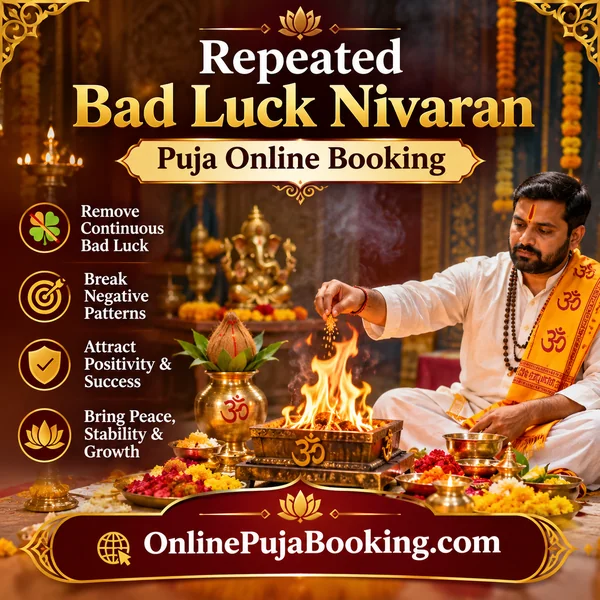

Repeated Bad Luck Nivaran Puja Online Booking
Repeated Bad Luck Nivaran Puja is a devotional Hindu ritual chosen by people who feel that they are experiencing recurring difficulties, unexpected setbacks, or periods of uncertainty in different areas of life. The puja is intended as a prayer for divine blessings, spiritual strength, peace, and guidance.
In Hindu religious practice, devotees often turn to prayer, mantra chanting, Havan, and worship of their Ishta Devata when facing challenging circumstances. The expression Nivaran generally refers to seeking relief or resolution through prayer and religious observances. In this context, Repeated Bad Luck Nivaran Puja provides an opportunity to offer a sincere Sankalp and seek divine grace.
Depending on the selected ritual tradition, the puja may involve Lord Ganesha, Lord Shiva, Goddess Durga, and Navagrahas. These deities have distinct places in Hindu worship: Lord Ganesha is traditionally invoked at the beginning of auspicious undertakings, Lord Shiva is worshipped for spiritual well-being and grace, Goddess Durga represents divine protection and Shakti, and Navagrahas are worshipped in connection with traditional beliefs about planetary influences.
Through OnlinePujaBooking.com, devotees can explore the available arrangements for Repeated Bad Luck Nivaran Puja and enquire about the ritual procedure, date preferences, and package inclusions.
Religious and Cultural Significance
The traditional Hindu understanding of life’s difficulties is broad. Different religious traditions discuss karma, personal effort, circumstances, planetary influences, devotion, and divine grace. Therefore, recurring setbacks are not automatically attributed to one particular cause or planetary condition.
Hindu devotees may perform special prayers when they experience repeated disappointments, obstacles in planned activities, family concerns, or uncertainty about the future. These observances are expressions of faith and an opportunity to seek spiritual support.
The worship of Lord Ganesha is particularly relevant because he is traditionally invoked before beginning religious ceremonies and important undertakings. His blessings are sought for wisdom, discernment, and the ability to approach difficulties with patience.
Lord Shiva is worshipped as a compassionate and powerful divine presence. Devotees offer prayers to him for inner peace, spiritual discipline, and freedom from fear. Goddess Durga is revered as the embodiment of divine Shakti, and her worship is associated with courage, protection, and strength.
Navagraha worship may also be included where the devotee wishes to offer prayers according to traditional Jyotisha practices. The nine planetary deities are worshipped as part of established Hindu religious observances. However, a general Repeated Bad Luck Nivaran Puja should not automatically be described as a specific planetary Dosha remedy. A personalised planetary ritual may require a separate consultation.
The puja is therefore best understood as a devotional observance for seeking blessings, developing resilience, and approaching life’s challenges with faith and a balanced outlook.
Sanskrit Shloka or Mantra
The following established mantras are suitable for a devotional puja that includes Lord Ganesha and Goddess Durga. They are presented as traditional deity mantras, not as a special formula that guarantees the removal of bad luck.
1. Lord Ganesha Mantra
ॐ गं गणपतये नमः॥
Roman Transliteration:
Om Gam Ganapataye Namah.
Meaning:
Salutations to Lord Ganesha, the divine remover of obstacles and the source of wisdom.
Relevance to This Puja:
Lord Ganesha is traditionally worshipped at the beginning of auspicious ceremonies. Devotees may chant this mantra while praying for clarity, good judgement, and the strength to face recurring challenges.
2. Goddess Durga Mantra
ॐ दुं दुर्गायै नमः॥
Roman Transliteration:
Om Dum Durgayai Namah.
Meaning:
Salutations to Goddess Durga, the divine Mother who represents strength, courage, and protection.
Relevance to This Puja:
Devotees may chant this mantra while seeking the blessings of Goddess Durga for courage, spiritual confidence, and strength during difficult periods.
Mantra pronunciation, chanting counts, and ritual arrangements should follow the guidance of the performing priest and the selected tradition.
Traditional Purpose and Devotional Benefits
Repeated Bad Luck Nivaran Puja is performed with several devotional intentions. These are traditional religious beliefs and prayers, not guaranteed or scientifically established outcomes.
- Prayer for a Positive Beginning: Devotees may seek divine blessings before starting a new personal, family, or professional chapter.
- Strength During Difficult Times: Worship is offered with the intention of developing patience, courage, and determination.
- Peace of Mind: Mantra chanting and prayer provide a structured opportunity for reflection, devotion, and spiritual calm.
- Divine Protection: Devotees may pray to Goddess Durga and Lord Shiva for blessings and spiritual reassurance.
- Wisdom in Decision-Making: Worship of Lord Ganesha is associated with seeking clarity and thoughtful judgement.
- Prayer for Family Well-Being: Families may perform the ritual together with a Sankalp for harmony, peace, and mutual understanding.
- Faith and Spiritual Discipline: Regular prayer can encourage devotion, gratitude, and a more balanced approach to everyday difficulties.
The puja should be considered a spiritual observance. Practical matters such as financial planning, professional decisions, family discussions, and medical concerns should also receive appropriate attention.
When Is This Puja Performed?
There is no single universally prescribed date or mandatory Hindu calendar occasion specifically for Repeated Bad Luck Nivaran Puja. It may be arranged according to the devotee’s Sankalp, family traditions, and the availability of the priest.
Some devotees prefer to perform special prayers on:
- Wednesday: Traditionally associated with Lord Ganesha in several regional worship practices.
- Monday: Commonly observed for worship of Lord Shiva.
- Friday: Frequently chosen for worship of Goddess Durga and other forms of Devi.
- Ashtami or Navami: Traditionally significant lunar dates for Devi worship.
- Ganesh Chaturthi: An important occasion for worshipping Lord Ganesha.
- Personal Auspicious Occasions: Before a new venture, relocation, or the beginning of an important undertaking.
The appropriate date and Muhurta may vary according to regional customs and the type of ritual selected. Devotees who want a personalised date may discuss their preferences before confirming the booking.
Who Can Book This Puja?
Repeated Bad Luck Nivaran Puja may be suitable for:
Individuals Facing Recurring Setbacks: People who feel that their plans repeatedly encounter difficulties may choose this prayer as a way to seek divine guidance and inner strength.
Families Seeking Peace: Families may perform the puja together with a Sankalp for harmony, understanding, and general well-being.
Business Owners and Professionals: Individuals beginning a new business, changing careers, or dealing with professional uncertainty may seek blessings for wisdom and perseverance.
Couples and Married Households: Couples may participate in a joint prayer for mutual understanding, peace, and strength during challenging circumstances.
Devotees Beginning a New Chapter: People starting a new job, moving into a new home, or preparing for an important personal decision may choose this ritual as a devotional beginning.
There is no restriction that only a person experiencing difficulties can perform this puja. Anyone wishing to offer sincere prayers for peace, strength, and divine blessings may enquire about the service.
Puja Vidhi: How the Ritual Is Traditionally Performed
The exact procedure for Repeated Bad Luck Nivaran Puja can vary according to the priest, regional tradition, and selected package. A possible format may include the following steps:
1. Preparation of the Puja Space
The worship area is cleaned and arranged respectfully. A suitable place is prepared for the deity images or idols, Kalash, flowers, lamps, and other ritual materials.
2. Achamana and Sankalp
The priest begins with customary purification prayers and takes the Sankalp on behalf of the devotee. The Sankalp may mention the devotee’s name, family details, location, and devotional intention.
3. Kalash Sthapana
Where included in the selected vidhi, a Kalash is established as part of the ceremonial preparation. The Kalash is worshipped with traditional offerings and prayers.
4. Ganesh Puja
Lord Ganesha is invoked before the main ritual. Flowers, Durva grass, incense, a lamp, and other customary offerings may be presented according to the tradition.
5. Main Deity Worship
The priest performs the worship of the selected deities, which may include Lord Shiva and Goddess Durga. Offerings such as flowers, sandalwood paste, fruits, and sacred water may be used.
6. Navagraha Puja (If Included)
Some ritual arrangements may include Navagraha worship. The nine planetary deities are respectfully invoked through prayers and customary offerings. This step is not compulsory for every version of the puja.
7. Mantra Jaap
The priest may chant Lord Ganesha, Lord Shiva, Goddess Durga, or other relevant mantras according to the selected Sankalp and ritual tradition. The mantra selection and chanting count depend on the agreed arrangement.
8. Havan (If Included)
If the package includes Havan, a sacred fire ritual is conducted with appropriate offerings while the prescribed mantras are recited. The procedure and materials depend on the specific Havan selected.
9. Purnahuti and Aarti
The Havan, where performed, concludes with Purnahuti. The priest may then perform Aarti and offer prayers for the well-being of the devotee and family.
10. Prasad and Ashirwad
The ceremony concludes with prayers, blessings, and distribution of Prasad where arranged. The devotee may receive guidance regarding any customary concluding observances.
These steps are an indicative overview rather than a mandatory universal procedure. The actual vidhi should be confirmed with the priest before booking.
Puja Samagri
Common materials that may be required include:
- Lord Ganesha, Shiva, or Durga images or idols, as applicable.
- Puja Chowki and clean cloth.
- Kalash and sacred water.
- Roli, Kumkum, Haldi, and Chandan.
- Akshat (unbroken rice).
- Fresh flowers and flower garlands.
- Incense sticks and Dhoop.
- Ghee or oil lamp and cotton wicks.
- Fruits, sweets, and other customary Naivedya.
- Betel leaves and betel nuts.
- Coconut.
- Durva grass for Lord Ganesha, where appropriate.
- Bilva leaves for Lord Shiva, where appropriate.
- Havan Kund, Havan Samagri, ghee, and wood, if Havan is included.
The exact Samagri list depends on the selected ritual and the priest’s instructions. Please confirm whether the package includes puja materials, Havan arrangements, and any other required items before completing your booking.
Why Book Through OnlinePujaBooking.com?
Arranging a religious ceremony involves selecting an appropriate ritual, understanding its procedure, and coordinating the date and service requirements. OnlinePujaBooking.com provides an online platform through which devotees can explore puja services and enquire about booking arrangements.
Convenient Online Enquiry: Explore Repeated Bad Luck Nivaran Puja without needing to begin the process through an in-person enquiry.
Review Package Inclusions: Check the available package details to understand what is included and what may require separate arrangements.
Share Your Preferred Date: Submit your preferred date and enquire about the availability of the service.
Discuss Ritual Requirements: Clarify whether the puja includes Ganesh Puja, Devi worship, Navagraha Puja, Mantra Jaap, Havan, and Samagri.
Understand Service Arrangements: Confirm the location, mode of performance, expected duration, and other practical details before booking.
Respectful Religious Presentation: The aim is to help devotees understand the nature of the ritual and make an informed booking decision.
Actual service availability and inclusions are subject to confirmation.
How to Book Repeated Bad Luck Nivaran Puja Online
Booking through OnlinePujaBooking.com can be approached in these simple steps:
- Find the Puja Service: Open the Repeated Bad Luck Nivaran Puja service page on OnlinePujaBooking.com.
- Review the Package: Read the description and check the ritual procedure, inclusions, and available options.
- Choose Your Preferred Date: Select or request a suitable date according to your preference.
- Provide Booking Details: Enter the devotee’s name, contact information, location, and any details requested for the Sankalp.
- Clarify Special Requirements: Ask about priest availability, puja location, Samagri, Havan, and the expected duration.
- Confirm Your Booking: Proceed according to the website’s booking instructions and wait for confirmation of the service arrangements.
Providing accurate details helps ensure that the booking requirements are understood before the ceremony.
Frequently Asked Questions (FAQs)
1. What is Repeated Bad Luck Nivaran Puja?
Repeated Bad Luck Nivaran Puja is a devotional Hindu ritual performed by people seeking divine blessings during periods of recurring difficulties or uncertainty. It may include worship, mantra chanting, and Havan according to the selected package.
2. Which deity is worshipped in this puja?
The ritual may include Lord Ganesha, Lord Shiva, and Goddess Durga. Navagrahas may also be worshipped if included in the chosen procedure. The exact deities depend on the priest and selected ritual arrangement.
3. What is the religious significance of this puja?
Its religious significance lies in seeking divine grace, spiritual strength, peace, and guidance. Devotees use the occasion to express faith and make a Sankalp for a more balanced and positive approach to life’s challenges.
4. What are the traditional devotional benefits?
Devotees traditionally pray for courage, clarity, family harmony, peace of mind, and strength during difficult periods. These are spiritual intentions rather than guaranteed practical outcomes.
5. When should Repeated Bad Luck Nivaran Puja be performed?
There is no single mandatory date for this general devotional ritual. A suitable day may be selected according to the devotee’s preference, family tradition, priest’s guidance, and available Muhurta.
6. Can this puja be arranged at home?
Home arrangements may be possible depending on the selected service and location. Customers should confirm whether the priest can perform the ceremony at their home and what arrangements are required.
7. Can I book Repeated Bad Luck Nivaran Puja online?
Yes. You can explore the service through OnlinePujaBooking.com, review the available package information, submit your preferred date, and enquire about the arrangements before confirming.
8. What Samagri is required for this puja?
Common items may include flowers, fruits, Kumkum, Haldi, Chandan, Akshat, incense, a lamp, coconut, and deity-specific offerings. Havan materials are needed if the selected package includes Havan. Confirm the final list with the service provider.
9. How long does the puja take?
The duration depends on the selected ritual. A simple worship ceremony may take less time than an arrangement that includes extended Mantra Jaap, Navagraha worship, or Havan. Confirm the expected duration before booking.
10. Can I request a preferred date for the puja?
Yes. You may submit your preferred date while enquiring or booking. The date will be subject to the service availability and confirmation of arrangements.
11. What should I confirm before booking?
Confirm the selected deities, ritual procedure, whether Havan or Mantra Jaap is included, Samagri arrangements, location, duration, priest availability, and any additional charges or requirements.
12. Does this puja guarantee the removal of bad luck?
No religious ritual should be advertised as guaranteeing a particular outcome. This puja is an expression of devotion and a prayer for divine blessings, peace, and strength. Personal, financial, professional, and family challenges may also require practical action and appropriate professional guidance.
Final Booking Call to Action
If you wish to offer prayers during a difficult phase of life and seek divine blessings for peace, courage, and guidance, explore Repeated Bad Luck Nivaran Puja Online Booking through OnlinePujaBooking.com. Review the available service details, discuss the ritual requirements, and share your preferred date. Make your Sankalp with faith and devotion, while taking thoughtful steps towards a positive and balanced future.

Reviews
There are no reviews yet.