
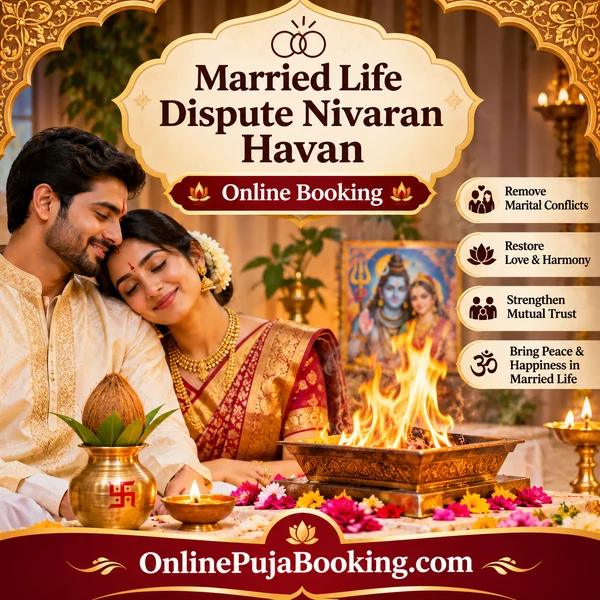


Married Life Dispute Nivaran Havan Online Booking
Married Life Dispute Nivaran Havan is a Hindu devotional fire ritual intended for couples and families who wish to pray for peace, understanding, patience, and harmony in married life. The word havan refers to a sacred fire ceremony in which offerings are made into the consecrated fire while priests or participants recite appropriate mantras.
This service is a devotional observance rather than a single universally prescribed Vedic ceremony with one fixed procedure. The deities, mantras, offerings, and sequence may differ according to regional customs, family traditions, the priest’s guidance, and the selected package.
Couples experiencing disagreements, communication difficulties, or tension within the household may choose to arrange this havan as a spiritual expression of their wish to improve their relationship. It can also be performed by family members who wish to pray for the well-being of a married couple.
Religious and Cultural Significance
In Hindu tradition, marriage is often understood as a sacred partnership involving companionship, mutual responsibility, family life, and shared spiritual duties. A harmonious married life is associated with values such as dharma (right conduct), sneha (affection), kshama (forgiveness), and paraspara samman (mutual respect).
Lord Shiva and Goddess Parvati are widely revered as an ideal divine couple. Their worship is associated with devotion, partnership, strength, and the balance of complementary qualities. Gauri-Shankar worship is therefore a meaningful devotional choice for couples praying for a peaceful relationship.
Some families may also include prayers to Lord Ganesha before beginning the main ritual. In Hindu worship, Ganesha is traditionally invoked at the beginning of auspicious ceremonies. Depending on the family tradition, prayers to Lakshmi-Narayana or other household deities may also be included.
The havan fire represents a sacred medium through which offerings and prayers are made. Mantra recitation and offerings such as ghee and selected havan materials form part of the devotional observance.
It is important to understand that there is no single standardised ritual called Married Life Dispute Nivaran Havan followed identically by all Hindu traditions. The exact form should be discussed with the performing priest before booking.
Sanskrit Shloka or Mantra
The following established devotional mantras may be used where appropriate to the chosen form of worship. They are presented as mantras, not as quotations from a particular scripture.
1. Shiva Panchakshara Mantra
Sanskrit:
ॐ नमः शिवाय॥
Roman Transliteration:
Om Namah Shivaya.
Meaning:
“I bow to Lord Shiva.”
Relevance to this Puja:
Lord Shiva is worshipped as a symbol of spiritual strength, compassion, and inner balance. Couples may recite this mantra as a prayer for calmness, patience, and thoughtful conduct during difficult situations in married life.
2. Gauri-Shankar Prayer Mantra
Sanskrit:
ॐ गौरीशंकराय नमः॥
Roman Transliteration:
Om Gaurishankaraya Namah.
Meaning:
“Salutations to Gauri and Shankar, the divine forms of Goddess Parvati and Lord Shiva.”
Relevance to this Puja:
Gauri and Shankar are worshipped together as a divine couple. Devotees may offer this prayer while seeking blessings for companionship, mutual respect, affection, and harmony between spouses.
The performing priest may select additional mantras according to the family tradition and the specific puja procedure.
Traditional Purpose and Devotional Benefits
Married Life Dispute Nivaran Havan is traditionally performed with prayers and intentions such as:
- Praying for marital harmony: Couples seek divine blessings for a more peaceful and respectful relationship.
- Encouraging mutual understanding: Devotees pray for the ability to listen patiently and understand each other’s perspectives.
- Seeking emotional balance: Mantra recitation and prayer may provide a meaningful opportunity for reflection, calmness, and spiritual focus.
- Praying for family peace: Families may offer prayers for a supportive and peaceful home environment.
- Seeking forgiveness and reconciliation: Couples may use the occasion to express a sincere intention to move beyond resentment and communicate constructively.
- Strengthening shared spiritual values: Participating in a religious ceremony can help couples reconnect through shared faith and devotion.
- Praying for a stable partnership: Devotees seek blessings for commitment, responsibility, affection, and cooperation.
These are traditional devotional intentions. A havan cannot guarantee reconciliation or resolve every marital difficulty. Honest communication, mutual consent, and appropriate professional support may also be important when a relationship is facing serious challenges.
When Is This Puja Performed?
There is no universally mandatory date or tithi for Married Life Dispute Nivaran Havan. The suitable timing may depend on the family’s religious tradition, the priest’s advice, and the availability of the chosen service.
Some families prefer to arrange the havan on an auspicious day selected according to their Hindu calendar and personal circumstances. Monday may be considered suitable by devotees who wish to worship Lord Shiva. Pradosh Tithi, Purnima, or other auspicious occasions may also be considered according to the family’s tradition.
Couples may request a date based on their convenience and discuss its religious suitability with the priest before confirming the booking.
Who Can Book This Puja?
This havan may be relevant to:
- Married couples wishing to pray for greater understanding and harmony.
- Couples experiencing recurring disagreements or communication difficulties.
- Spouses who wish to begin a fresh phase of married life with mutual respect and positive intentions.
- Families praying for peace and well-being in a married couple’s household.
- Couples wishing to include Shiva-Parvati or Gauri-Shankar worship in their family prayers.
- Devotees who want to perform a traditional havan as part of a personal spiritual observance.
Both spouses may participate together when possible. If one spouse cannot attend, the family can discuss participation arrangements with the priest.
Puja Vidhi: How the Ritual Is Traditionally Performed
The precise procedure varies according to the selected ritual, priest, and regional tradition. A customary havan may include the following stages:
1. Preparation of the Puja Area
The place of worship is cleaned and arranged respectfully. A havan kund is prepared, and the required puja materials are organised. A suitable seating arrangement is made for the priest and participating family members.
2. Achamana and Sankalpa
The priest may guide the participants through achamana, a traditional purification observance. A sankalpa is then taken, expressing the intention of performing the havan and offering prayers for peace and harmony in married life.
3. Invocation of Lord Ganesha
Where included in the chosen procedure, Lord Ganesha is worshipped before the principal ritual. This customary opening prayer seeks blessings for an auspicious and orderly ceremony.
4. Kalasha Sthapana and Preliminary Worship
A kalasha may be established and worshipped as part of the preparatory observances. The priest may offer prayers to the relevant deities according to the selected puja method.
5. Shiva-Parvati or Gauri-Shankar Worship
The main devotional worship may be dedicated to Lord Shiva and Goddess Parvati. Offerings such as flowers, sandalwood paste, incense, fruits, and other customary materials may be used where appropriate.
6. Mantra Jaap
The priest recites the selected mantras associated with Shiva, Parvati, Gauri-Shankar, or other deities included in the ritual. Participants may join in the recitation where guided to do so.
7. Havan and Sacred Offerings
The sacred fire is prepared and offerings are made while the prescribed mantras are recited. Ghee, samidha, and suitable havan materials may be offered according to the priest’s procedure.
8. Prarthana for Marital Harmony
The couple or family may offer a prayer for mutual understanding, patience, forgiveness, affection, and peace within the household. This is an opportunity to express a sincere commitment to respectful communication and shared responsibility.
9. Purnahuti and Aarti
The havan may conclude with purnahuti, the final offering into the sacred fire. Aarti and concluding prayers may follow according to the ritual tradition.
10. Prasad and Blessings
The ceremony concludes with prayers and distribution of prasad where arranged. The priest may offer blessings to the couple and family.
This is a general outline, not a compulsory procedure for every tradition. The actual vidhi should be confirmed with the priest before the ceremony.
Puja Samagri
Commonly used materials may include:
- Havan kund and suitable firewood or samidha.
- Pure ghee for havan offerings.
- Havan samagri as prescribed by the priest.
- Flowers and garlands.
- Kumkum, haldi, sandalwood paste, and akshat.
- Incense sticks and a diya.
- Fruits, sweets, and other naivedya offerings.
- Kalasha, water, and mango leaves where required.
- Betel leaves and betel nuts where customary.
- Cotton wicks and other aarti materials.
The exact list depends on the selected ritual and the priest’s tradition. Customers should confirm whether samagri, havan arrangements, and other materials are included in their chosen package or need to be arranged separately.
Why Book Through OnlinePujaBooking.com?
Arranging a religious ceremony involves coordinating the preferred date, ritual details, location, and required materials. OnlinePujaBooking.com provides an online way to explore the Married Life Dispute Nivaran Havan service and enquire about its booking arrangements.
Before confirming, customers can review the available package information and clarify the details relevant to their ceremony. This helps families understand what is included and what may need to be arranged separately.
When making an enquiry, customers should communicate their preferred date, location, participation requirements, and any specific family traditions they would like to discuss. Service arrangements should be confirmed before the booking is considered final.
The intention is to make the booking process convenient while treating the religious observance with respect and care.
How to Book Married Life Dispute Nivaran Havan Online
- Find the puja service: Visit OnlinePujaBooking.com and locate the Married Life Dispute Nivaran Havan listing.
- Review package details: Read the available information about the ritual, inclusions, samagri, and service arrangements.
- Choose a preferred date: Submit your preferred date and discuss its suitability and availability.
- Provide booking information: Share the required contact details, location, and any relevant ceremony preferences.
- Clarify special requirements: Confirm the deity worship, ritual format, participation arrangements, and whether samagri is included.
- Confirm your booking: Proceed after receiving confirmation of the service details and agreed arrangements.
Frequently Asked Questions (FAQs)
1. What is Married Life Dispute Nivaran Havan?
It is a Hindu devotional fire ritual arranged with prayers for peace, patience, mutual understanding, and harmony between married partners. The procedure may include Shiva-Parvati worship, mantra recitation, and sacred fire offerings.
2. Which deity is worshipped in this havan?
Lord Shiva and Goddess Parvati, worshipped together as Gauri-Shankar, are common choices for prayers concerning married life. Other deities may be included according to the priest’s tradition and the selected package.
3. What is the religious significance of this havan?
The ceremony provides an opportunity for couples and families to seek divine blessings for companionship, respect, forgiveness, and a peaceful household. It is a devotional observance rooted in Hindu prayer and havan traditions.
4. What are the traditional devotional benefits?
Devotees traditionally pray for improved understanding, emotional balance, affection, family peace, and strength in their partnership. These are religious intentions rather than guaranteed results.
5. When should Married Life Dispute Nivaran Havan be performed?
There is no single compulsory date. Families may choose a suitable day after consulting the priest and considering their religious customs and personal convenience.
6. Can this havan be arranged at home?
A home ceremony may be possible if the selected service supports the required location and arrangements. Customers should confirm venue suitability, havan fire arrangements, and service availability before booking.
7. Can I book this havan online?
Yes. You can explore the service and submit a booking enquiry through OnlinePujaBooking.com. The preferred date and other arrangements should be confirmed before the booking is finalised.
8. What samagri is required for this havan?
Common materials include ghee, samidha, havan samagri, flowers, fruits, incense, a diya, and customary worship items. The exact requirements depend on the priest’s procedure and selected package.
9. How long does the havan take?
The duration depends on the number of mantras, the form of deity worship, and the scale of the ceremony. Ask for the expected duration when confirming the service details.
10. Can I request a preferred date?
You may submit your preferred date during the booking enquiry. The date remains subject to confirmation and the service arrangements available for that occasion.
11. Can one spouse perform the havan without the other?
Participation requirements can vary by ritual tradition. A family member or one spouse may be able to participate depending on the priest’s guidance and the selected ceremony format. Confirm this before booking.
12. Does this havan guarantee that marital disputes will end?
No. A religious ceremony cannot guarantee that a relationship problem will disappear or that another person will change their behaviour. The havan is a devotional prayer for peace and harmony. Constructive communication, mutual willingness, and suitable counselling or professional support may also be helpful.
Book Married Life Dispute Nivaran Havan Online
If you and your family wish to offer prayers for greater understanding, patience, and harmony in married life, explore Married Life Dispute Nivaran Havan through OnlinePujaBooking.com. Review the available service details, enquire about your preferred date, and confirm the ritual procedure, samagri, and participation arrangements before booking. May your prayers be accompanied by compassion, mutual respect, and peace in your home.

Reviews
There are no reviews yet.