

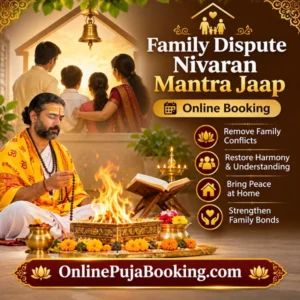

Divorce Problem Shanti Puja Online Booking
Divorce Problem Shanti Puja is a devotional prayer service for individuals and families facing serious marital difficulties, separation, or the possibility of divorce. Its central intention is to seek divine blessings for peace of mind, patience, wisdom, emotional strength, and respectful decision-making during a challenging period of life.
The name describes a purpose-oriented devotional service rather than one universally fixed Vedic ceremony. Hindu traditions do not prescribe a single standardised ritual called “Divorce Problem Shanti Puja” for every person or circumstance. Depending on the family tradition, priest’s guidance, and selected package, the prayer may include worship of Lord Ganesha, Lord Shiva, Goddess Parvati, and prayers for general peace and well-being.
This puja is not intended to force reconciliation, change another person’s decision, or interfere with anyone’s free will. It may instead be arranged with a sincere sankalpa for calm communication, a fair and peaceful resolution, and the welfare of everyone affected.
Religious and Cultural Significance
In Hindu devotional practice, prayer is often an important source of strength during difficult personal circumstances. When a marriage faces conflict, prolonged disagreement, or separation, devotees may turn to worship, mantra recitation, and shanti prayers to seek clarity and inner steadiness.
Lord Ganesha is traditionally worshipped at the beginning of auspicious activities and is associated with wisdom and the removal of obstacles. Invoking Ganesha at the start of this puja expresses the devotee’s wish to approach difficult decisions with a clear mind.
Lord Shiva is worshipped in many Hindu traditions as a symbol of auspiciousness, spiritual strength, and transformation. Devotees may chant the Shiva mantra while praying for patience, self-reflection, and the ability to move through difficult changes with dignity.
Goddess Parvati is revered as a divine mother and as Shiva’s consort. Her worship may be included in prayers for compassion, family well-being, mutual respect, and emotional balance. The form of worship and the prayers selected can differ among regional and family traditions.
A shanti-oriented sankalpa may also include prayers for the well-being of both spouses, children, and family members. The intention is not necessarily to preserve a marriage at any cost. In some circumstances, devotees may pray for reconciliation; in others, they may seek an amicable separation, reduced conflict, and a peaceful new beginning.
Sanskrit Shloka or Mantra
The following are established devotional mantras and a widely recited prayer for universal well-being. They may be included according to the priest’s chosen procedure and the family’s tradition.
1. Lord Ganesha Mantra
Sanskrit:
ॐ गं गणपतये नमः ॥
Roman Transliteration:
Om Gam Ganapataye Namah.
Meaning:
Salutations to Lord Ganesha.
Relevance to this Puja:
Lord Ganesha is traditionally invoked at the beginning of worship. Devotees may recite this mantra to seek wisdom, clarity, and the strength to face difficult circumstances thoughtfully. The mantra is an invocation, not a promise that a particular personal or legal problem will disappear.
2. Lord Shiva Mantra
Sanskrit:
ॐ नमः शिवाय ॥
Roman Transliteration:
Om Namah Shivaya.
Meaning:
Salutations to Lord Shiva, the auspicious one.
Relevance to this Puja:
This well-known Shaiva mantra is used in devotional worship and japa. During a shanti-oriented prayer, devotees may recite it with the intention of cultivating calmness, spiritual reflection, patience, and acceptance during a period of change.
3. Prayer for Universal Well-being
Sanskrit:
सर्वे भवन्तु सुखिनः सर्वे सन्तु निरामयाः ।
सर्वे भद्राणि पश्यन्तु मा कश्चिद्दुःखभाग्भवेत् ॥
Roman Transliteration:
Sarve Bhavantu Sukhinah, Sarve Santu Niramayah.
Sarve Bhadrani Pashyantu, Ma Kashchid Duhkhabhag Bhavet.
Meaning:
May all be happy. May all be free from suffering. May everyone experience what is good and auspicious, and may no one have to endure sorrow.
Relevance to this Puja:
This widely recited prayer expresses goodwill towards all. It is especially appropriate for a prayer seeking peace and well-being for both spouses, children, and extended family members during a difficult separation. It is presented here as a traditional devotional prayer, without assigning it to a particular scripture.
Traditional Purpose and Devotional Benefits
The following are traditional devotional intentions. They represent prayers and religious beliefs, not scientifically established effects or guaranteed results.
- Peace of Mind: To pray for calmness and emotional steadiness during marital disagreements or separation.
- Wisdom in Decision-Making: To seek divine guidance before making important personal and family decisions.
- Respectful Communication: To pray for patience, understanding, and thoughtful communication between the people involved.
- Family Well-being: To offer prayers for children, parents, and other family members affected by marital conflict.
- Strength During Change: To seek courage and spiritual support while navigating uncertainty and significant life changes.
- Amicable Resolution: To express the hope that disagreements may be handled peacefully and with mutual dignity.
- A Peaceful New Beginning: To pray for acceptance, emotional recovery, and a constructive path forward, whatever the eventual decision may be.
When Is This Puja Performed?
There is no universally mandatory Hindu tithi, festival, or weekday specifically prescribed for a service called Divorce Problem Shanti Puja. Its timing can depend on the family’s religious tradition, the priest’s guidance, and the availability of the requested service.
Some families prefer to arrange a shanti prayer on a Monday because Monday is traditionally associated with Lord Shiva. Others may choose a personally meaningful date or a suitable day suggested by their priest.
The puja may be considered when:
- Marital disagreements have become prolonged and the family wishes to pray for peace.
- A couple is considering separation or divorce and wishes to seek clarity and strength.
- Spouses or relatives want to pray for an amicable resolution.
- Family members wish to pray for children’s emotional well-being during a difficult transition.
- An individual seeks spiritual support before beginning a new chapter of life.
An auspicious date may be selected according to the family’s panchang and tradition, but no particular date should be presented as compulsory for everyone.
Who Can Book This Puja?
This devotional service may be relevant to different people experiencing marital or family difficulties.
Individuals experiencing marital problems: Either spouse may arrange the puja independently with a personal sankalpa for peace, wisdom, and well-being.
Couples considering separation: Both spouses may participate if they freely wish to pray for respectful communication and a peaceful resolution.
Family members: Parents or close relatives may arrange a prayer for the well-being of the family, provided they respect the privacy and wishes of the people directly involved.
Parents concerned about children: A parent may include prayers for children’s peace, stability, and emotional well-being during a family transition.
Individuals beginning a new chapter: Someone who has already separated or divorced may choose a shanti prayer as a devotional way to seek strength, acceptance, and a peaceful future.
Participation by both spouses is not compulsory. No person should be pressured to attend, reconcile, or change a personal decision because of a religious ceremony.
Puja Vidhi: How the Ritual Is Traditionally Performed
The precise procedure for Divorce Problem Shanti Puja may vary because the service is not one universally standardised Vedic ritual. The following is an illustrative outline of a possible shanti-oriented ceremony. The priest may adapt it according to the selected package, regional custom, and family tradition.
1. Preparation and Purification
The worship area is cleaned and prepared. The priest or participants arrange the required puja materials and prepare for the ceremony. Participants may take a bath and wear clean, modest clothing according to their custom.
2. Sankalpa
The person arranging the puja takes a sankalpa, stating the devotional intention. This may be a prayer for peace of mind, clarity, respectful communication, family well-being, or an amicable resolution. Personal details should be shared only to the extent needed for the ritual.
3. Invocation of Lord Ganesha
The ceremony may begin with a prayer to Lord Ganesha. The priest may offer flowers, durva grass, incense, and other customary items while reciting an appropriate mantra.
4. Worship of Lord Shiva and Goddess Parvati
If included in the selected procedure, the priest performs Shiva worship and offers prayers to Goddess Parvati. Depending on the tradition, this may involve a simple archana, mantra recitation, or a customary offering.
5. Mantra Jaap and Shanti Prayers
The priest may recite selected mantras such as Om Namah Shivaya and Om Gam Ganapataye Namah. A prayer for universal well-being may also be recited for peace within the family and goodwill towards all concerned.
6. Havan, If Included
Some packages or family traditions may include a small havan. Offerings are made into the sacred fire while the priest recites the prescribed mantras. A havan should only be included if it is part of the confirmed service and suitable arrangements are available.
7. Aarti and Prasad
The worship may conclude with aarti, prayers for peace, and distribution of prasad where applicable. The priest may explain the customary closing steps and any simple devotional practice the participants wish to continue.
This outline is not a mandatory procedure for every Hindu tradition. Customers should confirm the actual ritual sequence, participating deities, duration, and whether havan is included in their chosen package.
Puja Samagri
The required samagri depends on the actual ritual selected. Common items for a simple Ganesh-Shiva shanti prayer may include:
- Fresh flowers and garlands.
- Fruits and seasonal offerings.
- Coconut and betel leaves, where customary.
- Kumkum, haldi, and chandan.
- Akshata or unbroken rice grains.
- Incense sticks and dhoop.
- Diya, cotton wicks, and ghee or oil.
- Panchamrit ingredients, if abhishek is included.
- Bilva leaves for Lord Shiva, where appropriate.
- Durva grass for Lord Ganesha, where appropriate.
- Kalash and clean water.
- Havan samagri, ghee, and wood, only if havan is part of the package.
- Prasad ingredients.
The exact list may change according to the priest’s procedure and regional custom. Before booking, customers should confirm whether samagri is included, whether they need to arrange any items themselves, and whether the selected package includes a havan or only puja and mantra jaap.
Why Book Through OnlinePujaBooking.com?
OnlinePujaBooking.com provides an online route to explore and request Hindu puja services without having to organise every initial booking detail through in-person visits.
For a sensitive service such as Divorce Problem Shanti Puja, it is especially important to understand what is included before confirming. Customers can review the available package information, request a preferred date, and communicate relevant arrangements through the booking process.
Before proceeding, customers should check the service location, whether the puja is conducted at home or another agreed venue, the participating deities, the ritual format, samagri arrangements, and any additional charges.
The aim is to make the booking process clear and respectful while allowing customers to choose a devotional service that suits their beliefs and circumstances. Any date or service request remains subject to confirmation.
How to Book Divorce Problem Shanti Puja Online
Follow these practical steps to request your puja service:
- Find the Puja Service: Visit OnlinePujaBooking.com and locate Divorce Problem Shanti Puja Online Booking.
- Review the Package: Read the service description and check the included rituals, deity worship, mantra jaap, havan options, and samagri details.
- Choose a Preferred Date: Select or request a date that is convenient for you. The date will need confirmation.
- Provide Booking Details: Enter the required contact information, location, and any details requested for the sankalpa.
- Confirm Service Arrangements: Check the venue, ritual duration, package inclusions, and any additional requirements with the service team.
- Complete Your Booking: Follow the available booking and payment instructions and retain your confirmation details.
For privacy, provide only the personal information necessary to arrange the puja. You do not need to share sensitive marital or legal documents for a devotional booking unless a specific, legitimate service requirement has been clearly explained.
Frequently Asked Questions (FAQs)
1. What is Divorce Problem Shanti Puja?
Divorce Problem Shanti Puja is a purpose-oriented Hindu devotional prayer for people facing marital difficulties, separation, or divorce-related stress. It may include prayers for peace, clarity, patience, and an amicable resolution. The exact ritual varies by tradition and package.
2. Which deity is worshipped in this puja?
A shanti-oriented service may include Lord Ganesha, Lord Shiva, and Goddess Parvati. The exact deities depend on the priest’s procedure and the selected package. Customers should confirm the worship details before booking.
3. What is the religious significance of this puja?
Its devotional significance lies in seeking divine guidance, inner strength, and peace during a difficult family situation. It may also include prayers for the well-being of both spouses and children.
4. What are the traditional devotional benefits?
Devotees may pray for emotional strength, wisdom, patience, peaceful communication, family well-being, and acceptance during change. These are spiritual intentions and traditional beliefs, not guaranteed real-world outcomes.
5. When should Divorce Problem Shanti Puja be performed?
There is no single mandatory date or tithi for this purpose-oriented service. A suitable day may be selected according to personal convenience, family tradition, or the priest’s guidance. Some devotees prefer Monday for Shiva worship.
6. Can this puja be arranged at home?
It may be arranged at home if the selected service and priest’s arrangements permit it. Confirm the location, space requirements, havan arrangements, and any safety requirements before booking.
7. Can I book Divorce Problem Shanti Puja online?
You can use OnlinePujaBooking.com to explore the service and submit a booking request. Your preferred date, location, package, and service arrangements should be confirmed before the booking is treated as final.
8. What samagri is required for this puja?
Flowers, fruits, diya, incense, kumkum, haldi, rice, and deity-specific offerings may be used. Additional materials are needed if abhishek or havan is included. The final list depends on the selected ritual.
9. How long does the puja take?
The duration depends on whether the service includes simple puja, extended mantra jaap, abhishek, or havan. Ask for the estimated duration of the exact package before confirming.
10. Can I request a preferred date for the puja?
Yes. You may request a preferred date during the booking process. The requested date and service arrangements are subject to availability and confirmation.
11. Do both spouses need to attend the puja?
No. Either spouse may arrange the puja individually. Both spouses may participate if they freely wish to do so. No one should be pressured to attend or reconcile.
12. Does this puja guarantee reconciliation or prevent divorce?
No. A religious ceremony cannot guarantee reconciliation, prevent a divorce, or determine another person’s decision. The puja is a devotional practice for peace, strength, and guidance. For legal questions, consult a qualified family-law professional; for emotional or relationship support, consider an appropriately qualified counsellor.
Final Booking Call to Action
If you or your family are going through a difficult marital phase, Divorce Problem Shanti Puja may offer a meaningful opportunity to pray for peace, clarity, patience, and the well-being of everyone involved. Explore the available service details on OnlinePujaBooking.com, review the package inclusions, request your preferred date, and confirm the arrangements before booking. May your prayers be accompanied by wisdom, compassion, dignity, and peace.
Reviews
There are no reviews yet.