
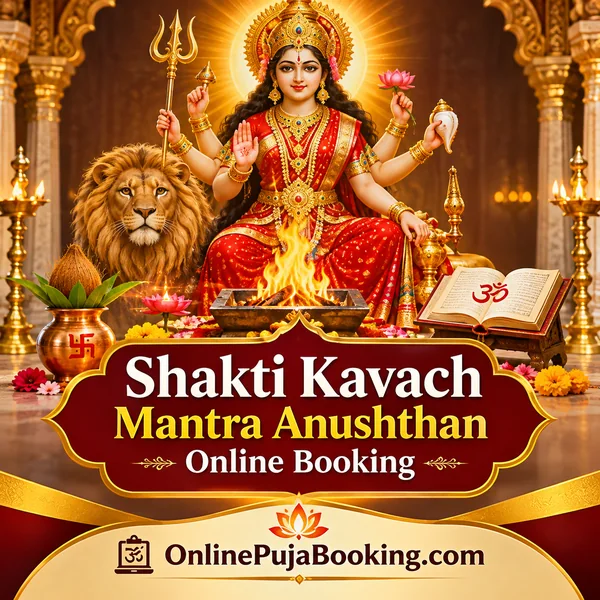
Shakti Kavach Mantra Anushthan Online Booking
Shakti Kavach Mantra Anushthan is a traditional form of Hindu devotional worship dedicated to Goddess Shakti, the Divine Mother and the universal source of divine energy. The term Shakti represents the feminine divine power, while Kavach means armour or protective covering. In Hindu devotional traditions, a Kavach is a sacred prayer or hymn recited to seek the grace, protection, and blessings of a deity.
A Shakti Kavach Anushthan generally involves the worship of Devi and the recitation of an appropriate protective prayer associated with the Divine Mother. Depending on the selected tradition, the worship may be connected with Goddess Durga, Mahakali, Chandika, or another manifestation of Shakti.
Devotees arrange this ritual as an expression of faith and a prayer for courage, spiritual strength, peace, and divine guidance. It may be performed individually or on behalf of a family, depending on the ritual arrangement.
Through Shakti Kavach Mantra Anushthan Online Booking, devotees can explore the service, discuss their preferred date, and review the arrangements before confirming a puja.
Religious and Cultural Significance
In Hinduism, Goddess Shakti is worshipped as the supreme divine energy that sustains creation and represents the power of the Divine Mother. She is revered in many forms, including Durga, Kali, Parvati, Lakshmi, and Saraswati.
The concept of a Kavach has an important place in Hindu devotional literature. A Kavach prayer traditionally invokes the deity’s protection over different parts of the body, the mind, and the devotee’s surroundings. It expresses surrender to divine grace and reminds worshippers to cultivate faith, courage, discipline, and righteousness.
Several Devi-related protective hymns are found in Hindu religious traditions. One well-known example is the Devi Kavach associated with the Durga Saptashati, also known as the Devi Mahatmya or Chandi Path. It is traditionally recited as part of Devi worship and is associated with invoking the protection of the Goddess.
The precise text used in a Shakti Kavach Mantra Anushthan depends on the chosen Devi tradition. A Durga Kavach, for example, is not automatically identical to a Kali Kavach or another Devi protective prayer. The selected text and ritual sequence should therefore be clarified before the ceremony.
The anushthan is not simply a recitation intended to obtain a particular result. It is also a devotional practice through which worshippers express gratitude, seek spiritual guidance, and strengthen their relationship with the Divine Mother.
Sanskrit Shloka or Mantra
The following are established Devi mantras suitable for devotional worship. They are presented as mantras rather than as quotations from a specific Kavach scripture.
1. Durga Mantra
Sanskrit:
ॐ दुं दुर्गायै नमः॥
Roman Transliteration:
Om Dum Durgayai Namah.
Meaning:
Salutations to Goddess Durga, the Divine Mother who represents strength, courage, and protection.
Relevance to the Anushthan:
This is a widely used devotional mantra dedicated to Goddess Durga. It can be included in Devi worship and mantra recitation as an expression of reverence and a prayer for divine protection.
2. Universal Devi Mantra
Sanskrit:
ॐ ऐं ह्रीं क्लीं चामुण्डायै विच्चे॥
Roman Transliteration:
Om Aim Hreem Kleem Chamundayai Vichche.
Meaning:
This is a traditional Navarna mantra associated with Goddess Chamunda, a powerful manifestation of the Divine Mother. Its sacred syllables are used in Shakta worship and are traditionally regarded as representing divine energy and the power of the Goddess.
Relevance to the Anushthan:
The Navarna mantra is associated with Devi worship and is traditionally used in Chandi-related devotional practices. Whether it is included in a particular Shakti Kavach Anushthan depends on the selected ritual tradition and the priest’s guidance.
Traditional Purpose and Devotional Benefits
Shakti Kavach Mantra Anushthan is traditionally performed with devotion and a prayer for the grace of the Divine Mother. The following are common devotional intentions associated with Devi Kavach recitation:
- Prayer for Divine Protection: Devotees seek the shelter and grace of Goddess Shakti for themselves and their families.
- Courage and Inner Strength: Worship is undertaken as a prayer for confidence, determination, and the ability to face difficult circumstances.
- Spiritual Discipline: Regular mantra recitation encourages concentration, devotion, and consistency in religious practice.
- Peace of Mind: Devotees may perform the anushthan with a prayer for calmness, emotional balance, and spiritual reassurance.
- Family Well-being: Families may arrange Devi worship together as an expression of unity, faith, and collective prayer.
- Removal of Fear Through Faith: The ritual symbolises surrender to the Divine Mother and a prayer for strength when facing uncertainty.
- Spiritual Growth: Recitation and worship encourage reflection on divine qualities such as compassion, courage, wisdom, and righteousness.
These are traditional religious beliefs and devotional intentions. The anushthan should not be understood as a guarantee of protection from every danger or a substitute for practical, professional, or medical assistance when required.
When Is This Puja Performed?
Shakti Kavach Mantra Anushthan may be arranged on different occasions according to the devotee’s religious tradition and the specific Devi Kavach being recited.
Some commonly suitable occasions include:
1. Navratri
Navratri is one of the most important periods for worshipping Goddess Durga and other manifestations of Shakti. Devotees may arrange Devi mantra recitation, Durga worship, and related anushthans during the nine days.
2. Durga Ashtami
The eighth day of Navratri is traditionally dedicated to Goddess Durga. Many families perform special Devi worship and devotional recitations on this occasion.
3. Maha Navami
Maha Navami is another significant occasion for Devi worship. Devotees may arrange a special prayer or mantra anushthan as part of their Navratri observances.
4. Fridays
Friday is traditionally associated with the worship of several forms of the Divine Mother in different Hindu communities. Some devotees prefer this day for Devi mantra recitation.
5. Personal Sankalpa
A devotee may also request an anushthan for a personal spiritual intention, family prayer, or regular religious observance. The appropriate date can be discussed according to family customs and the priest’s guidance.
There is no single universally mandatory date for every Shakti Kavach recitation. The selected Devi tradition, local customs, and ritual arrangements should guide the timing.
Who Can Book This Puja?
Shakti Kavach Mantra Anushthan may be relevant to a wide range of devotees who wish to worship the Divine Mother.
Individuals: Those who wish to strengthen their devotional practice and pray for courage, spiritual discipline, and divine guidance.
Families: Households that wish to arrange a collective Devi prayer for family well-being and spiritual harmony.
Devotees of Goddess Durga: People who regularly worship Maa Durga and wish to include Kavach recitation in their religious observances.
Shakta Tradition Followers: Devotees who follow Shakta traditions and wish to arrange a suitable Devi mantra anushthan.
Navratri Worshippers: Families and individuals planning special Devi worship during Navratri, Durga Ashtami, or Maha Navami.
Devotees Living Away from Their Hometown: People who wish to explore online arrangements for a traditional ritual when organising it independently is difficult.
A devotee does not need to belong to a particular community to express devotion to the Divine Mother. However, specific mantra practices may have tradition-based requirements, which should be discussed with the priest.
Puja Vidhi: How the Ritual Is Traditionally Performed
The precise procedure for Shakti Kavach Mantra Anushthan depends on the selected Kavach text, Devi tradition, and the priest conducting the ritual. The following is a general overview of a customary Devi worship arrangement, not a mandatory procedure for every tradition.
Step 1: Preparation of the Puja Space
The worship area is cleaned and arranged respectfully. An image or idol of the chosen form of Goddess Shakti is placed on a clean platform. The required puja materials are organised before the ceremony.
Step 2: Sankalpa
The priest or devotee takes a Sankalpa, which is a formal statement of devotional intention. The name of the devotee, family details, and the purpose of the worship may be included according to the selected ritual format.
Step 3: Ganesh Smaran and Invocation
The ceremony may begin with remembrance and worship of Lord Ganesha, who is traditionally invoked before many Hindu religious ceremonies. This is followed by prayers to the Divine Mother.
Step 4: Kalasha Sthapana
Where included in the selected procedure, a Kalasha is established as a sacred symbol associated with auspiciousness and divine presence. Water, leaves, and other traditional materials may be used according to the custom being followed.
Step 5: Devi Dhyana and Avahana
The priest performs meditation and invocation of the selected form of Goddess Shakti. Flowers, incense, lamps, and other offerings may be presented with appropriate prayers.
Step 6: Shakti Kavach Recitation
The selected Devi Kavach is recited with concentration and devotion. If the chosen ritual follows the Durga Saptashati tradition, the Durga Kavach may be included according to the prescribed sequence.
The priest may also recite the appropriate Devi mantra or perform a specified number of repetitions, depending on the agreed anushthan.
Step 7: Mantra Jaap
The selected mantra may be repeated using a Japa Mala or another customary method. The number of repetitions should be established beforehand rather than assumed to be the same for every package.
Step 8: Devi Archana
The Goddess is worshipped with flowers, kumkum, sandalwood paste, and other suitable offerings. Names or devotional attributes of the chosen form of Devi may be recited during the archana.
Step 9: Havan, If Included
Some anushthan arrangements may include a Havan. In that case, offerings are made into the sacred fire while the prescribed mantras are recited. The Havan is not automatically part of every Shakti Kavach service and should be confirmed in the package details.
Step 10: Aarti and Prarthana
The ceremony may conclude with Devi Aarti and a prayer for divine grace, spiritual strength, peace, and well-being.
Step 11: Prasad and Completion
Prasad is offered and distributed according to the custom followed. The priest concludes the ritual with appropriate closing prayers.
The exact sequence, duration, mantra count, and inclusion of Havan may vary by regional practice, sampradaya, and the selected package.
Puja Samagri
The materials required for Shakti Kavach Mantra Anushthan depend on the chosen form of Devi worship and the ritual format.
Commonly used items may include:
- Picture or idol of Goddess Durga or the selected form of Shakti.
- Clean puja cloth and worship platform.
- Flowers and flower garlands.
- Kumkum and turmeric.
- Sandalwood paste.
- Incense sticks and dhoop.
- Ghee or oil lamp and cotton wicks.
- Akshat (unbroken rice grains).
- Fruits and traditional offerings.
- Betel leaves and betel nuts, where customary.
- Kalasha and water, if required.
- Panchamrit ingredients, if included in the ritual.
- Durga Kavach or the selected Devi prayer text.
- Japa Mala, where required.
- Havan Kund, ghee, and suitable Havan materials, if Havan is included.
Customers should confirm whether the selected package includes puja samagri, Havan arrangements, priest dakshina, and other required materials. Some arrangements may require the devotee to organise particular items locally.
Why Book Through OnlinePujaBooking.com?
Planning a traditional Hindu ritual involves understanding the ceremony, selecting a suitable date, and confirming the required arrangements. OnlinePujaBooking.com provides an online platform through which devotees can explore puja services and review the available booking information.
Convenient Online Enquiry: Explore Shakti Kavach Mantra Anushthan without having to begin the booking process through multiple in-person enquiries.
Review Service Details: Check the selected package and understand the ritual components before proceeding.
Preferred Date Request: Share your preferred date and enquire about the arrangements for the requested occasion.
Clear Communication: Discuss the selected Devi Kavach, mantra recitation, Havan inclusion, and other relevant requirements before confirmation.
Family and Personal Worship: Explore arrangements for individual or family Sankalpa according to the selected service.
Respect for Religious Traditions: The ritual details can be discussed with attention to the relevant Devi tradition and customary practices.
The availability of specific priests, locations, ritual components, and materials should always be confirmed before the booking is treated as final.
How to Book Shakti Kavach Mantra Anushthan Online
Booking through OnlinePujaBooking.com can be approached in the following steps:
Step 1: Explore the Puja Service
Find the Shakti Kavach Mantra Anushthan service and read the description to understand the general purpose and ritual details.
Step 2: Review Package Inclusions
Check whether the selected package includes Devi worship, Kavach recitation, mantra jaap, Havan, samagri, and other arrangements.
Step 3: Choose Your Preferred Date
Select or request a date according to your personal requirements, Navratri observance, or other suitable religious occasion.
Step 4: Provide Booking Details
Submit the required devotee information, contact details, location, and Sankalpa information as requested during booking.
Step 5: Confirm the Ritual Arrangements
Clarify the selected Kavach text, mantra count, duration, samagri requirements, and any additional services.
Step 6: Complete the Booking
Proceed according to the available booking instructions and payment process. Treat the service as confirmed only after receiving the applicable confirmation.
Frequently Asked Questions (FAQs)
1. What is Shakti Kavach Mantra Anushthan?
Shakti Kavach Mantra Anushthan is a devotional Hindu ritual dedicated to Goddess Shakti. It generally involves Devi worship and the recitation of a protective prayer or Kavach associated with the Divine Mother.
2. Which deity is worshipped during this anushthan?
The primary deity is Goddess Shakti. Depending on the selected tradition, worship may focus on Goddess Durga, Chamunda, Kali, or another manifestation of the Divine Mother. The exact form should be confirmed before booking.
3. What is the religious significance of a Shakti Kavach?
A Kavach is traditionally understood as a sacred protective prayer. Devotees recite it to seek the Goddess’s blessings, express surrender, and pray for spiritual strength and protection.
4. What are the traditional devotional benefits of this puja?
Devotees traditionally associate this worship with prayers for courage, faith, spiritual discipline, inner strength, family well-being, and divine guidance. These are religious intentions, not guaranteed outcomes.
5. When is Shakti Kavach Mantra Anushthan usually performed?
It may be arranged during Navratri, Durga Ashtami, Maha Navami, Fridays, or other suitable occasions. The date depends on the devotee’s tradition and the selected ritual.
6. Can this puja be arranged at home?
Yes, a home-based arrangement may be possible depending on the service format and priest availability. The required worship space, materials, and arrangements should be confirmed before booking.
7. Can I book Shakti Kavach Mantra Anushthan online?
Yes. You can explore the service through OnlinePujaBooking.com, review the available package details, submit your preferred date, and follow the booking confirmation process.
8. What samagri is required for this puja?
Common items include a Devi image or idol, flowers, kumkum, turmeric, sandalwood, incense, a lamp, fruits, and the selected Kavach prayer text. Additional items may be required if Kalasha Puja or Havan is included.
9. How long does the anushthan take?
The duration depends on the selected Kavach, number of mantra repetitions, additional Devi worship, and whether Havan is included. Confirm the expected duration with the service provider before booking.
10. Can I request a preferred date for the puja?
You can submit your preferred date during the booking process. The date remains subject to the applicable service arrangements and confirmation.
11. Can I request a specific Devi Kavach or mantra?
You may enquire about a particular text, such as the Durga Kavach associated with the Durga Saptashati. Its inclusion depends on the selected service and the priest’s customary procedure.
12. Does Shakti Kavach Mantra Anushthan guarantee protection or a particular result?
No religious ritual should be advertised as guaranteeing a particular outcome. This anushthan is a devotional practice through which worshippers seek the blessings and grace of Goddess Shakti. Its value lies in faith, prayer, and spiritual observance.
Final Booking Call to Action
Express your devotion to the Divine Mother through Shakti Kavach Mantra Anushthan. Whether you wish to arrange Devi worship during Navratri, observe a personal Sankalpa, or include Kavach recitation in your family’s religious practices, explore the available service details through OnlinePujaBooking.com. Review the package inclusions, request your preferred date, clarify the ritual arrangements, and proceed with your online booking after confirmation. May the blessings of Maa Shakti inspire courage, devotion, wisdom, and peace in your life.
Reviews
There are no reviews yet.