
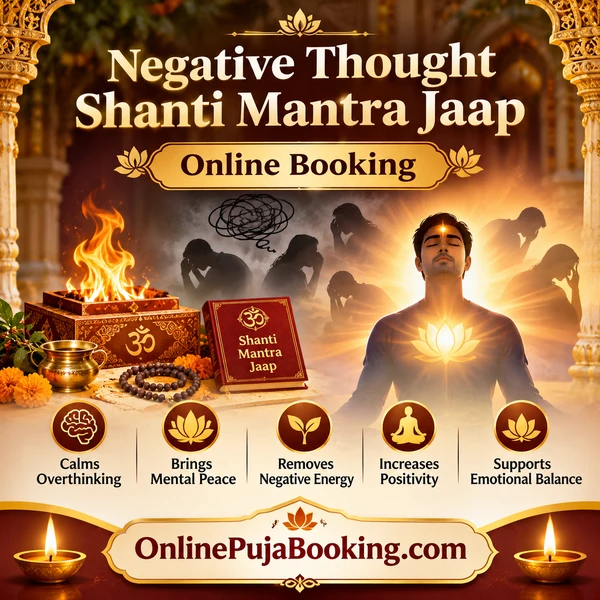

Negative Thought Shanti Mantra Jaap Online Booking
Negative Thought Shanti Mantra Jaap is a Hindu devotional practice involving the repeated recitation of sacred mantras with the intention of cultivating inner peace, spiritual awareness, positive thinking, and emotional balance. It is suitable for devotees who wish to dedicate time to prayer when facing persistent worries, discouraging thoughts, uncertainty, or difficult phases of life.
In Hindu spiritual traditions, mantra jaap is regarded as an important form of worship. Repeating a sacred name or mantra with concentration and devotion helps the devotee direct attention towards the divine. Rather than focusing continuously on troubling thoughts, the practitioner uses prayer as an opportunity to develop faith, patience, self-discipline, and a peaceful devotional mindset.
Through OnlinePujaBooking.com, devotees can explore options for arranging Negative Thought Shanti Mantra Jaap online and review the available service details before confirming their booking.
Religious and Cultural Significance
Mantra jaap has an established place in Hindu religious practice. The Sanskrit word mantra is traditionally associated with sacred sounds or expressions used in meditation, worship, and spiritual contemplation. Jaap refers to the repeated recitation of a mantra, either aloud, softly, or mentally.
In Hinduism, different deities are worshipped for different devotional purposes. Lord Shiva is associated with spiritual transformation, compassion, and the contemplative path. Lord Hanuman is worshipped for devotion, courage, and strength. Goddess Durga represents divine power and protection, while Lord Ganesha is traditionally worshipped at the beginning of auspicious activities.
For a Negative Thought Shanti Mantra Jaap, the selected deity and mantra should be appropriate to the devotee’s faith and the chosen ritual tradition. There is no single universally prescribed mantra bearing this exact service name. The specific mantra should therefore be confirmed with the priest or according to the selected package.
Devotees may undertake this practice to pray for:
- Greater peace and clarity in everyday life.
- Strength to approach challenging circumstances with patience.
- Freedom from persistent discouraging thought patterns through spiritual discipline.
- A more positive and devotional outlook.
- Harmony within the household.
- Greater concentration during prayer and meditation.
These are traditional devotional intentions, not guaranteed psychological or medical outcomes.
Sanskrit Shloka or Mantra
The following are established Hindu mantras that may be considered for a peace-oriented devotional practice. The appropriate selection depends on the deity and the priest’s chosen tradition.
1. Lord Shiva Panchakshari Mantra
Devanagari:
ॐ नमः शिवाय॥
Roman Transliteration:
Om Namah Shivaya.
Meaning:
I offer my salutations to Lord Shiva, the auspicious and compassionate divine presence.
Relevance to this Puja:
Lord Shiva is worshipped by devotees seeking spiritual awareness, calmness, and inner transformation. Repeating this mantra with devotion can form the central part of a Shiva-oriented Negative Thought Shanti Mantra Jaap.
2. Shanti Mantra
Devanagari:
ॐ सर्वे भवन्तु सुखिनः।
सर्वे सन्तु निरामयाः।
सर्वे भद्राणि पश्यन्तु।
मा कश्चिद्दुःखभाग्भवेत्॥
Roman Transliteration:
Om Sarve Bhavantu Sukhinah,
Sarve Santu Niramayah,
Sarve Bhadrani Pashyantu,
Ma Kashchid Duhkha Bhag Bhavet.
Meaning:
May all beings be happy. May all be free from illness and suffering. May everyone experience goodness, and may no one be subjected to sorrow.
Relevance to this Puja:
This widely recited peace prayer expresses goodwill, compassion, and the wish for universal well-being. It is suitable for concluding a peace-oriented mantra jaap or offering prayers for harmony in personal and family life.
Traditional Purpose and Devotional Benefits
Negative Thought Shanti Mantra Jaap is undertaken with faith and the intention of developing a more peaceful relationship with one’s thoughts and circumstances.
Traditional devotional intentions include:
- Inner Peace: Devotees pray for a calmer state of mind and a peaceful approach to everyday challenges.
- Positive Thinking: Repetition of sacred mantras is used as a devotional discipline to encourage constructive thoughts and intentions.
- Spiritual Strength: Worshippers seek divine guidance and courage during uncertain or difficult periods.
- Improved Concentration: Focused mantra repetition provides a structured opportunity for prayer, reflection, and meditation.
- Family Harmony: Families may dedicate the jaap to peace, understanding, and goodwill within their household.
- Emotional Resilience: Devotees pray for patience, faith, and the strength to face difficult experiences.
- Devotional Discipline: Regular jaap encourages consistency in worship and a deeper connection with the chosen deity.
These benefits describe religious beliefs and spiritual intentions. They should not be understood as scientifically established treatment or a guarantee that unwanted thoughts will disappear.
When Is This Puja Performed?
There is no universally mandatory Hindu festival or tithi specifically prescribed for Negative Thought Shanti Mantra Jaap.
Devotees may arrange this practice according to personal faith, family traditions, and priestly guidance. Some suitable occasions include:
- During periods of personal worry or uncertainty.
- When beginning a regular spiritual or meditation routine.
- On Mondays for devotees following Lord Shiva worship traditions.
- On Tuesdays or Saturdays for devotees who worship Lord Hanuman.
- During Navratri for devotees who wish to pray to Goddess Durga.
- On Purnima or Amavasya when these days are significant to the family’s worship tradition.
- During a personal sankalpa for peace, harmony, and spiritual development.
The appropriate day, timing, mantra count, and duration should be decided according to the selected ritual format and the devotee’s tradition.
Who Can Book This Puja?
Negative Thought Shanti Mantra Jaap may be suitable for:
Individuals experiencing difficult phases: People who wish to dedicate time to prayer during periods of uncertainty, discouragement, or repeated worrying thoughts.
Working professionals: Individuals seeking a regular spiritual practice alongside demanding professional responsibilities.
Students: Students who wish to develop a disciplined prayer routine and pray for concentration and confidence during their studies.
Couples and families: Household members who wish to pray together for peace, mutual understanding, and a positive family atmosphere.
Devotional practitioners: People who regularly worship Lord Shiva, Hanuman, Durga, or another chosen deity and wish to include a special mantra jaap in their worship.
Anyone seeking spiritual discipline: Devotees interested in mantra repetition, prayer, and meditation may consider this service according to their beliefs.
There is no restriction based solely on age or occupation for ordinary devotional participation. Specific ritual requirements, if any, should be confirmed with the priest.
Puja Vidhi: How the Ritual Is Traditionally Performed
The precise procedure for Negative Thought Shanti Mantra Jaap depends on the selected deity, mantra, regional tradition, and priest’s guidance. A typical devotional arrangement may include the following stages.
1. Preparation of the Puja Space
The worship area is cleaned and arranged respectfully. A picture or idol of the chosen deity may be placed on a clean platform. Flowers, a lamp, and other customary worship materials are arranged.
2. Devotee’s Sankalpa
The devotee or yajaman takes a sankalpa, expressing the intention behind the prayer. This may include a wish for inner peace, spiritual strength, positive intentions, and family harmony.
3. Ganesh Vandana
In many Hindu ritual traditions, worship begins with prayers to Lord Ganesha. Devotees seek his blessings for an auspicious and uninterrupted ceremony.
4. Invocation of the Chosen Deity
The priest or devotee offers prayers to the selected deity, such as Lord Shiva, Lord Hanuman, or Goddess Durga. The invocation may include dhyana, avahana, and customary offerings according to the ritual tradition.
5. Main Mantra Jaap
The selected mantra is recited repeatedly with concentration and devotion. A mala may be used to maintain the repetition count. The number of repetitions depends on the selected package and the priest’s guidance.
6. Devotional Offerings
Flowers, incense, a lamp, water, fruits, or other suitable offerings may be presented while the mantra is recited. The exact offerings vary according to the deity and worship tradition.
7. Shanti Prarthana
A peace prayer may be recited at the conclusion of the main jaap. The devotee offers prayers for personal well-being, family harmony, and universal peace.
8. Aarti and Prasad
The ritual may conclude with aarti, a final prayer, and distribution of prasad. The priest may explain any customary concluding practices included in the chosen service.
This is a general overview rather than a mandatory procedure. The actual vidhi should be confirmed for the selected package.
Puja Samagri
Commonly used materials for a simple mantra jaap may include:
- A picture or idol of the chosen deity.
- Clean puja cloth or asana.
- Flowers and flower garlands.
- Incense sticks and dhoop.
- Diya and suitable oil or ghee.
- Cotton wicks.
- Kumkum, chandan, and akshat (rice grains).
- Clean water in a kalash or vessel.
- Fruits and other suitable naivedya offerings.
- A japa mala, if required for the selected mantra.
- Camphor for aarti.
- Prasad materials.
Some materials may differ for Shiva, Hanuman, or Durga worship. Customers should check their selected package to confirm whether samagri is included, arranged separately, or expected to be provided by the devotee.
Why Book Through OnlinePujaBooking.com?
Arranging a religious ceremony can involve selecting a suitable ritual, understanding the materials required, and coordinating the preferred date and service arrangements.
OnlinePujaBooking.com provides an online platform where devotees can explore puja services and review the available booking information.
Convenient Service Exploration: Browse the relevant puja details online instead of relying only on in-person enquiries.
Package Information: Review the selected service’s description and available inclusions before placing a booking request.
Preferred Date Request: Submit your preferred date and discuss the arrangements subject to availability.
Clear Communication: Share the required booking details and clarify questions about the ritual, mantra, and materials.
Respect for Religious Traditions: The service description is intended to help devotees understand the devotional purpose and customary aspects of the ritual.
Booking Clarity: Check the service arrangements, duration, location or online format, and any additional requirements before confirmation.
How to Book Negative Thought Shanti Mantra Jaap Online
Follow these practical steps to request your puja service through OnlinePujaBooking.com:
- Find the Service: Locate Negative Thought Shanti Mantra Jaap on the website and read its product description.
- Review the Package: Check the selected package, ritual format, inclusions, and any listed requirements.
- Choose a Preferred Date: Select or request a suitable date according to the available booking options.
- Provide Your Details: Enter the required devotee information, contact details, and other requested booking particulars.
- Confirm the Arrangements: Clarify the selected deity, mantra, jaap count, samagri, duration, and service format.
- Complete Your Booking: Follow the website’s booking and payment instructions and retain the confirmation details.
Please wait for confirmation of the service arrangements before treating the booking as finalized.
Frequently Asked Questions (FAQs)
1. What is Negative Thought Shanti Mantra Jaap?
It is a devotional Hindu mantra recitation practice performed with the intention of cultivating inner peace, positive awareness, spiritual strength, and a calm approach to life’s difficulties.
2. Which deity is worshipped during this jaap?
The deity depends on the selected ritual tradition. Lord Shiva, Lord Hanuman, and Goddess Durga are possible choices for peace-oriented devotional worship. The selected package should specify the deity and mantra.
3. What is the religious significance of this mantra jaap?
Mantra jaap is a traditional form of Hindu worship in which sacred sounds or divine names are repeated with devotion. It provides an opportunity for prayer, concentration, and spiritual reflection.
4. What are the traditional benefits of Negative Thought Shanti Mantra Jaap?
Devotees traditionally pray for inner peace, patience, spiritual strength, concentration, positive intentions, and family harmony. These are devotional aspirations rather than guaranteed outcomes.
5. When should I perform this puja?
There is no single compulsory date. It may be arranged on a personally meaningful day or according to the chosen deity’s worship tradition and the priest’s guidance.
6. Can this puja be arranged at home?
Yes, it may be arranged at home if the selected service format and arrangements permit it. The devotee should confirm the location and ritual requirements before booking.
7. Can I book Negative Thought Shanti Mantra Jaap online?
Yes. You can explore the service on OnlinePujaBooking.com, review the available package information, submit your preferred date, and follow the booking confirmation process.
8. What samagri is required for the mantra jaap?
Common materials include a deity picture or idol, flowers, diya, incense, water, fruits, kumkum, chandan, and a japa mala where appropriate. Exact requirements depend on the selected mantra and ritual.
9. How long does the mantra jaap take?
The duration depends on the mantra, repetition count, number of participants, and additional rituals. Confirm the expected duration for your chosen package before booking.
10. Can I request a preferred date and mantra?
You may submit a preferred date and discuss the mantra you wish to have recited. The final arrangements depend on the available service options and the priest’s guidance.
11. What should I confirm before booking?
Confirm the worshipped deity, exact mantra, repetition count, puja duration, location or online format, samagri inclusion, package price, and booking confirmation process.
12. Does this puja guarantee that negative thoughts will disappear?
No. A religious ritual cannot guarantee a particular mental or personal outcome. The jaap is a devotional practice intended to support prayer, reflection, and spiritual discipline. If persistent negative thoughts are affecting daily life, professional mental health support may also be helpful.
Book Negative Thought Shanti Mantra Jaap Online
Take a meaningful step towards a regular devotional practice with Negative Thought Shanti Mantra Jaap. Whether you wish to pray for inner peace, spiritual strength, positive intentions, or harmony in your family, this traditional form of mantra worship can become a dedicated time for prayer and reflection. Explore the service details, review the available package, and request your preferred arrangements through OnlinePujaBooking.com.

Reviews
There are no reviews yet.