
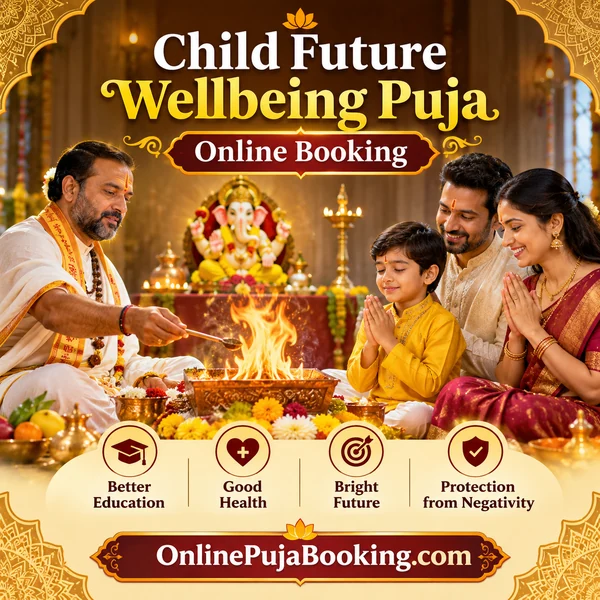


Child Future Wellbeing Puja Online Booking
A child’s wellbeing is one of the most cherished wishes of every parent. In Hindu tradition, families often offer prayers to the divine for their children’s happiness, protection, wisdom, good health, education, and positive upbringing. Child Future Wellbeing Puja is a devotional Hindu worship service through which parents and family members seek divine blessings for a child’s present and future.
This puja is not restricted to one universally prescribed ritual or deity. Depending on family tradition, regional customs, and the selected package, prayers may be offered to Lord Ganesha, Goddess Saraswati, Lord Vishnu, Lord Krishna, Lord Shiva, or the family’s Ishta Devata.
Through traditional worship, mantra recitation, devotional offerings, and family participation, devotees express their hopes and gratitude while praying for a peaceful, supportive, and spiritually positive environment for their child.
OnlinePujaBooking.com provides an online platform to explore and request this puja service. Families can review the available arrangements and communicate their preferred date and ritual requirements before confirming their booking.
Religious and Cultural Significance
Children hold an important place in Hindu religious and cultural traditions. Parents traditionally regard their children’s upbringing as a responsibility that includes physical care, education, moral development, spiritual values, and family संस्कार (samskaras).
Hindu worship frequently includes prayers for a child’s wellbeing at different stages of life. These prayers may be connected with specific deities according to the qualities devotees seek to honour.
Lord Ganesha is traditionally worshipped before important beginnings and is associated with wisdom, discernment, and the removal of obstacles. Parents may include Ganapati worship when praying for their child’s education, new opportunities, and a positive future.
Goddess Saraswati is revered as the goddess of knowledge, learning, speech, music, and the arts. Families may offer prayers to her when their children begin formal education, prepare for examinations, or develop intellectual and creative abilities.
Lord Vishnu and Lord Krishna are worshipped by devotees seeking divine protection, preservation, righteousness, and family wellbeing. Their worship may be included in a child’s wellbeing ceremony according to family tradition.
Some families also pray to Lord Shiva, Goddess Durga, or their Kuldevta and Kuldevi. The choice of deity depends on personal devotion and the ritual tradition being followed.
An important distinction is that Child Future Wellbeing Puja is best understood as a family prayer and devotional observance, rather than a single fixed Vedic ceremony with an identical procedure across all Hindu communities.
Sanskrit Shloka or Mantra
The following established mantras are suitable for inclusion in a child wellbeing prayer according to the chosen deities and family tradition.
1. Shri Ganesh Mantra
Sanskrit:
ॐ गं गणपतये नमः॥
Roman Transliteration:
Om Gam Ganapataye Namah.
Meaning:
Salutations to Lord Ganesha, the divine remover of obstacles and the source of wisdom and auspicious beginnings.
Relevance to Child Future Wellbeing Puja:
Parents may recite this mantra while praying for their child’s learning, confidence, good judgement, and progress through different stages of life. Ganapati worship is traditionally performed before beginning important activities and ceremonies.
2. Saraswati Mantra
Sanskrit:
ॐ ऐं सरस्वत्यै नमः॥
Roman Transliteration:
Om Aim Saraswatyai Namah.
Meaning:
Salutations to Goddess Saraswati, the divine embodiment of knowledge, wisdom, learning, and the arts.
Relevance to Child Future Wellbeing Puja:
This mantra may be recited when parents pray for their child’s education, understanding, memory, communication skills, and interest in learning. It is particularly appropriate when Saraswati worship is included in the ceremony.
Traditional Purpose and Devotional Benefits
Child Future Wellbeing Puja is traditionally performed with several devotional intentions. These represent the prayers and religious beliefs of devotees, not guaranteed real-world results.
- Prayer for Overall Wellbeing: Parents seek divine blessings for their child’s happiness, safety, and positive development.
- Wisdom and Knowledge: Worship of Lord Ganesha and Goddess Saraswati expresses the family’s hope for learning, intelligence, and good judgement.
- Positive Values: Families pray that their children develop kindness, discipline, honesty, respect, and compassion.
- Spiritual Protection: Devotees offer prayers for divine grace and a sense of protection throughout their child’s life.
- Educational Progress: Parents may include prayers for concentration, curiosity, confidence, and dedication towards education.
- Peaceful Family Environment: The ceremony can bring family members together in a shared expression of love, gratitude, and responsibility.
- Auspicious New Beginnings: Families may perform the puja before an important milestone, such as starting school or beginning a new educational journey.
These devotional intentions complement, rather than replace, responsible parenting, appropriate healthcare, education, emotional support, and practical guidance.
When Is This Puja Performed?
There is no single universally mandatory date for Child Future Wellbeing Puja. Families may arrange it according to their religious preferences, family customs, and the availability of the requested ritual service.
Commonly considered occasions include:
1. Child’s Birthday
Parents may arrange a puja on a child’s birthday to express gratitude and pray for another year of happiness, learning, and positive development.
2. Naming Ceremony (Namkaran)
Some families include prayers for the child’s wellbeing during or alongside the traditional naming ceremony.
3. Beginning of Education
The ceremony may be arranged when a child starts school, begins formal learning, or participates in a Vidyarambham or Aksharabhyasam ceremony.
4. Examination Period
Families may offer prayers to Goddess Saraswati and Lord Ganesha before an important academic examination.
5. Festivals Dedicated to the Deities
Saraswati Puja, Vasant Panchami, Ganesh Chaturthi, and other relevant religious occasions may be considered according to the deity and ritual selected.
6. Family-Selected Auspicious Day
Some families consult their family priest or follow their regional Panchang to select a suitable date and time.
The exact muhurat, if required, should be confirmed with the performing priest according to the family’s tradition and location.
Who Can Book This Puja?
Child Future Wellbeing Puja may be relevant to different families and caregivers.
- Parents of Young Children: Families wishing to pray for their child’s happiness, protection, and positive upbringing.
- Parents of School-Going Children: Those seeking blessings for education, learning, and personal development.
- Parents of Students: Families who wish to include Saraswati and Ganapati worship before important examinations.
- Grandparents and Relatives: Family members who want to participate in a devotional ceremony for a child’s wellbeing.
- Guardians and Caregivers: Individuals responsible for a child’s upbringing who wish to offer family prayers.
- Families Celebrating Milestones: Those observing a birthday, naming ceremony, school admission, or another important occasion.
The puja can be adapted to the child’s age and the family’s preferred religious customs.
Puja Vidhi: How the Ritual Is Traditionally Performed
The exact procedure depends on the selected deities, regional traditions, and the priest conducting the ceremony. The following is a general outline of how a family wellbeing puja may be organised.
Step 1: Preparation of the Puja Area
The worship area is cleaned and prepared. A suitable place is selected for the deity’s image or idol, and the necessary puja materials are arranged.
Step 2: Ganesh Vandana
The ceremony may begin with prayers to Lord Ganesha. Devotees seek blessings for an auspicious and uninterrupted puja.
Step 3: Sankalpa
The performing priest or family representative takes a Sankalpa, stating the devotional intention of the ceremony. The child’s name and relevant family details may be included according to the ritual tradition.
Step 4: Kalash Sthapana
If included in the selected ritual, a Kalash is prepared and worshipped as part of the ceremonial arrangements.
Step 5: Main Deity Worship
The selected deity is worshipped with appropriate offerings. This may include flowers, sandalwood paste, incense, a lamp, fruits, and other traditional materials.
If the family selects Saraswati worship, prayers may focus on knowledge and learning. If Ganapati worship is selected, the emphasis may be on wisdom and auspicious beginnings.
Step 6: Mantra Jaap and Prayer
The priest may recite relevant mantras or devotional prayers. Parents and family members may participate by repeating the mantras or offering flowers.
Step 7: Special Offerings
Naivedya, fruits, sweets, or other suitable offerings may be presented to the deity according to the selected ritual.
Step 8: Aarti and Prarthana
Aarti is performed, followed by prayers for the child’s happiness, wisdom, good values, and overall wellbeing.
Step 9: Prasad and Blessings
Prasad is distributed among family members. The ceremony concludes with prayers and blessings according to the family’s customs.
These steps are illustrative, not a mandatory procedure for every tradition. Havan, extended mantra jaap, or additional deity worship may be included only when specified in the selected package.
Puja Samagri
The following materials may commonly be used in a family wellbeing puja, depending on the chosen ritual:
- Fresh flowers and flower garlands.
- Incense sticks and dhoop.
- Ghee or oil diya.
- Sandalwood paste and kumkum.
- Akshata (rice grains used in worship).
- Fruits and traditional sweets.
- Coconut and betel leaves.
- Betel nuts.
- Kalash and clean water, if required.
- Camphor for Aarti.
- Sacred thread or Mauli, where customary.
- Images or idols of the selected deity.
- Books or educational materials for Saraswati worship, if included.
- Havan samagri and ghee, if the package includes a Havan.
The exact samagri list varies by ritual, region, and priestly tradition. Please confirm whether the materials are included in your selected package or need to be arranged separately.
Why Book Through OnlinePujaBooking.com?
Arranging a religious ceremony involves deciding the ritual format, preferred date, deity worship, samagri requirements, and other practical details. OnlinePujaBooking.com aims to make the service discovery and booking process more convenient for families.
Explore the Puja Service: Review the Child Future Wellbeing Puja listing and understand the type of ceremony you wish to arrange.
Review Package Inclusions: Check the available details regarding the ritual, priest arrangements, samagri, venue, and any additional services.
Communicate Your Preferences: Share the child’s name, preferred date, location, and other relevant information required for the ceremony.
Understand the Arrangements: Clarify whether the puja will include Ganapati worship, Saraswati worship, Havan, mantra jaap, or another selected ritual component.
Confirm Before Booking: Discuss the service details and confirm the booking only after understanding the applicable arrangements.
The aim is to help families organise a meaningful religious ceremony while keeping the booking process clear and convenient.
How to Book Child Future Wellbeing Puja Online
Follow these practical steps to request your puja service:
- Find the Puja Listing: Visit OnlinePujaBooking.com and explore the Child Future Wellbeing Puja service.
- Review the Package: Read the available description, ritual inclusions, samagri details, and service arrangements.
- Choose a Preferred Date: Select or request your preferred date and mention if you require a particular muhurat.
- Provide Required Details: Share relevant information such as the child’s name, family details, location, and preferred deity worship, if requested.
- Confirm Service Arrangements: Clarify the priest arrangement, puja duration, venue, samagri, and any additional requirements.
- Complete Your Booking: Proceed with the booking after reviewing and confirming the available service details.
Frequently Asked Questions (FAQs)
1. What is Child Future Wellbeing Puja?
Child Future Wellbeing Puja is a Hindu devotional ceremony performed by parents and family members to pray for a child’s happiness, wisdom, protection, education, and positive development. The selected ritual may include worship of Lord Ganesha, Goddess Saraswati, Lord Vishnu, or the family’s preferred deity.
2. Which deity is worshipped in Child Future Wellbeing Puja?
The deity depends on the selected ritual and family tradition. Lord Ganesha is worshipped for wisdom and auspicious beginnings, while Goddess Saraswati is associated with knowledge and learning. Some families also include Lord Vishnu, Lord Krishna, Lord Shiva, or their Kuldevta.
3. What is the religious significance of this puja?
The ceremony provides an opportunity for parents to express gratitude and seek divine blessings for their child’s wellbeing and upbringing. It reflects the Hindu tradition of including prayer, devotion, and spiritual values in important family milestones.
4. What are the traditional devotional benefits?
Devotees traditionally pray for their child’s happiness, wisdom, educational development, good character, spiritual protection, and a peaceful family environment. These are devotional intentions and should not be considered guaranteed outcomes.
5. When should Child Future Wellbeing Puja be performed?
It may be arranged on a child’s birthday, during a naming ceremony, before school admission, around examinations, or on a family-selected auspicious occasion. There is no single mandatory date for all families.
6. Can this puja be arranged at home?
Families may arrange this ceremony at home if the selected service supports a home-based ritual. The availability of the priest, location, ritual format, and other arrangements should be confirmed before booking.
7. Can I book Child Future Wellbeing Puja online?
Yes. You can explore the service on OnlinePujaBooking.com, review the available package information, share your preferred date and requirements, and confirm the booking after discussing the service arrangements.
8. What samagri is required for this puja?
Common materials may include flowers, fruits, incense, a diya, sandalwood paste, kumkum, rice, coconut, sweets, and other offerings. Additional items may be required for Kalash Sthapana or Havan. The final list depends on the selected ritual.
9. How long does Child Future Wellbeing Puja take?
The duration depends on the ritual format. A simple deity worship ceremony may take less time than an extended puja with multiple deities, mantra recitation, or Havan. Confirm the expected duration with the service provider before booking.
10. Can I request a preferred puja date?
Yes. You may share your preferred date while making the booking request. The date remains subject to availability and confirmation of the service arrangements.
11. Can the child’s name be included in the Sankalpa?
In many Hindu puja traditions, the Sankalpa may include the devotee’s name and family details. Parents can share the child’s name and relevant information in advance so the ritual arrangements can be discussed with the performing priest.
12. Does this puja guarantee a child’s success, health, or future wellbeing?
No. A religious ceremony cannot guarantee a particular result or determine a child’s future. It is a devotional expression of parental love, faith, and good wishes. A child’s development also depends on healthcare, education, emotional support, responsible parenting, and the opportunities available to them.
Final Booking Call to Action
A child’s future is a cherished hope for every family. Make your prayers and good wishes part of a meaningful Hindu devotional ceremony through Child Future Wellbeing Puja Online Booking. Explore the available service details, review the ritual arrangements, and request your preferred date through OnlinePujaBooking.com. Celebrate your child’s important milestones with devotion, family participation, and prayers for wisdom, happiness, and a positive journey ahead.



Reviews
There are no reviews yet.