
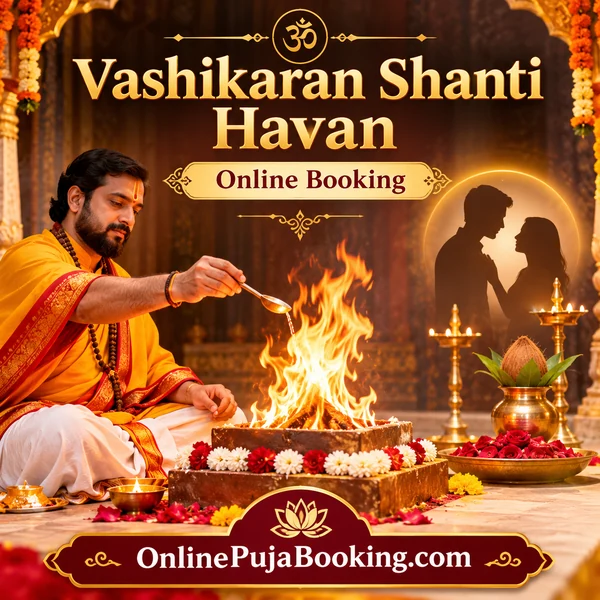

Vashikaran Shanti Havan Online Booking
Vashikaran Shanti Havan is a devotional Hindu fire ritual associated with traditional mantra practices, spiritual discipline, and prayers for harmony. The word Vashikaran comes from Sanskrit roots traditionally associated with bringing something under influence or control. In religious and folk traditions, different forms of Vashikaran practices have been described with different intentions and methods.
However, the term should be understood carefully. This service is presented as a peaceful devotional havan, focusing on positive intentions, emotional balance, mutual understanding, and harmony in relationships. It is not an invitation to manipulate another person, interfere with their consent, or attempt to override their free will.
Through sacred fire offerings, mantra recitation, and sankalpa, devotees express their prayers and seek spiritual strength. If you are experiencing misunderstandings, emotional distance, or difficulties in personal relationships, you may consider this havan as a form of religious devotion and reflection.
OnlinePujaBooking.com provides an online enquiry and booking option for devotees interested in arranging Vashikaran Shanti Havan.
Religious and Cultural Significance
In Hindu religious traditions, a havan or homa is a sacred fire ceremony in which offerings are made into an consecrated fire while appropriate mantras are recited. Fire, or Agni, has an important place in Vedic ritual traditions and is regarded as a divine witness and carrier of offerings.
The traditional significance of a shanti havan is connected with prayers for peace, purification, auspiciousness, and spiritual well-being.
Vashikaran-related practices appear in certain streams of Hindu mantra and tantric traditions. Their methods and interpretations vary considerably. Not every tradition follows the same deity, mantra, procedure, or purpose. There is also no single universally prescribed Vashikaran Shanti Havan procedure shared by all Hindu sampradayas.
For a peaceful version of this ritual, the devotional emphasis can be placed on:
- Developing self-control and emotional stability.
- Encouraging affection and mutual respect.
- Praying for better understanding between individuals.
- Reducing anger, resentment, and misunderstandings.
- Seeking divine guidance before making important relationship decisions.
This approach respects the religious context while recognizing that healthy relationships depend on consent, communication, and the choices of everyone involved.
Sanskrit Shloka or Mantra
The following are established mantras appropriate to the peaceful devotional intention of this havan. They are general prayers, not presented as specific Vashikaran formulas.
1. Agni Mantra
Sanskrit:
ॐ अग्नये स्वाहा।
Roman Transliteration:
Om Agnaye Swaha.
Meaning:
Salutations and offerings to Agni, the sacred fire. The mantra is traditionally recited while making an offering into the havan fire.
Relevance to This Puja:
Agni is central to the havan ritual. This mantra may be used during the offering stage according to the priest’s chosen procedure.
2. Shanti Mantra
Sanskrit:
ॐ सर्वे भवन्तु सुखिनः।
सर्वे सन्तु निरामयाः।
सर्वे भद्राणि पश्यन्तु।
मा कश्चिद्दुःखभाग्भवेत्॥
Roman Transliteration:
Om Sarve Bhavantu Sukhinah,
Sarve Santu Niramayah,
Sarve Bhadrani Pashyantu,
Ma Kashchid Duhkha Bhag Bhavet.
Meaning:
May everyone be happy. May everyone be free from suffering. May all experience goodness, and may no one be subjected to sorrow.
Relevance to This Puja:
This well-known peace prayer reflects the intention of goodwill, harmony, and the well-being of all. It is particularly appropriate when the devotee wishes to pray for peaceful relationships without seeking to control another person.
Traditional Purpose and Devotional Benefits
Devotees may undertake Vashikaran Shanti Havan with the following traditional spiritual intentions:
- Prayer for Relationship Harmony: Seeking divine blessings for mutual respect and understanding between partners or family members.
- Emotional Balance: Praying for patience, calmness, and better control over anger or impulsive reactions.
- Positive Intentions: Cultivating goodwill and encouraging constructive thoughts toward others.
- Peaceful Communication: Seeking spiritual strength to resolve misunderstandings through respectful conversation.
- Personal Confidence: Praying for courage and clarity when dealing with difficult personal situations.
- Spiritual Discipline: Developing devotion through mantra recitation, sankalpa, and participation in a sacred fire ritual.
- Family Well-being: Offering prayers for a peaceful and supportive atmosphere within the household.
These are traditional devotional intentions rather than scientifically established effects or guaranteed outcomes. A havan cannot guarantee that another person will develop particular feelings or behave in a specific way.
When Is This Puja Performed?
Vashikaran Shanti Havan does not have one universally mandatory date or festival. Its timing may depend on the devotee’s intention, the chosen ritual tradition, and the priest’s guidance.
Some devotees prefer to arrange personal shanti rituals on an auspicious day selected according to their family traditions or Hindu Panchang.
The following considerations may be discussed while selecting a date:
- A suitable weekday based on the chosen deity or tradition.
- An auspicious tithi or nakshatra, if recommended by the priest.
- A date convenient for the participating family members.
- A suitable time for performing the havan at the selected location.
There is no need to assume that a particular planetary position or festival is compulsory for every version of this havan. The exact timing should be confirmed during booking discussions.
Who Can Book This Puja?
Vashikaran Shanti Havan may be considered by adult devotees who wish to undertake a peaceful spiritual ritual for personal reflection and relationship harmony.
It may be relevant for:
- Married couples praying for mutual understanding and peace.
- Individuals experiencing relationship misunderstandings.
- Families seeking harmony among household members.
- Devotees looking for emotional balance during difficult personal situations.
- People wishing to strengthen their spiritual discipline through mantra and havan.
- Individuals seeking prayers for goodwill, affection, and respectful communication.
The ritual should not be used to threaten, manipulate, stalk, or control another person. Participation should be voluntary, and the wishes and boundaries of everyone involved should be respected.
Puja Vidhi: How the Ritual Is Traditionally Performed
The exact procedure of Vashikaran Shanti Havan depends on the specific tradition, selected mantra, and priest’s instructions. The following is a general outline of a peaceful havan format rather than a mandatory procedure for every lineage.
Step 1: Preparation of the Puja Space
The ritual area is cleaned and arranged. A havan kund is placed in a suitable location, and the necessary worship materials are organized.
Step 2: Achamana and Sankalpa
The participants undertake customary purification and the priest guides the sankalpa. The devotee states the purpose of the ritual, such as praying for peace, emotional balance, and relationship harmony.
Step 3: Ganesh Vandana
In traditions where it is customary, Lord Ganesha is worshipped at the beginning of the ceremony. Prayers are offered for an auspicious and unobstructed completion of the ritual.
Step 4: Kalasha Sthapana and Preliminary Worship
A kalasha may be established and worshipped according to the chosen ritual tradition. The priest may also perform prayers to the relevant deities and invoke blessings for peace.
Step 5: Mantra Recitation
The priest recites the selected devotional or shanti mantras. The exact mantra selection should be explained before the ritual and should follow a legitimate religious tradition.
Step 6: Havan Offerings
The sacred fire is prepared, and appropriate offerings are made while reciting the prescribed mantras. Common offerings may include ghee, samidha, and selected havan ingredients.
Step 7: Shanti Prarthana
Prayers are offered for calmness, mutual understanding, goodwill, and the well-being of everyone concerned.
Step 8: Purnahuti and Aarti
The havan may conclude with purnahuti, followed by customary prayers or aarti according to the priest’s tradition.
Step 9: Prasad and Blessings
The ceremony concludes with prayers for peace and the distribution of prasad, if included in the selected arrangement.
The number of mantra repetitions, specific offerings, participating deities, and duration may differ between traditions. Customers should confirm the exact ritual format before booking.
Puja Samagri
Common materials used in a traditional shanti havan may include:
- Havan kund.
- Havan samagri.
- Pure ghee.
- Dry wood or suitable samidha.
- Camphor.
- Incense sticks and dhoop.
- Flowers and fresh leaves.
- Kumkum, haldi, and akshat.
- Kalasha and clean water.
- Fruits and seasonal offerings.
- Coconut.
- Betel leaves and supari.
- Cotton wicks and diya.
- Aasan for the priest and participants.
The exact list depends on the ritual tradition and the selected package. Please confirm whether samagri, havan kund, priest arrangements, and other materials are included before completing your booking.
Why Book Through OnlinePujaBooking.com?
Arranging a religious ceremony involves several practical details, including the preferred date, location, ritual requirements, and materials. OnlinePujaBooking.com provides a convenient way to explore puja services and submit a booking enquiry online.
When considering Vashikaran Shanti Havan, customers can review the available service information and understand the proposed arrangements before confirming.
The online booking process can help you:
- Explore the Vashikaran Shanti Havan service from home.
- Review available package information and inclusions.
- Request a preferred date for the ceremony.
- Communicate relevant details about your puja requirements.
- Clarify the samagri and ritual arrangements.
- Receive booking communication before the service is finalized.
Please review all service details carefully. Availability, location coverage, package inclusions, and other arrangements should be confirmed before making a final booking.
How to Book Vashikaran Shanti Havan Online
Follow these practical steps to submit your booking request:
- Visit the Puja Service Page: Find Vashikaran Shanti Havan on OnlinePujaBooking.com.
- Review the Package: Check the available package details, inclusions, and service information.
- Choose Your Preferred Date: Select or request a suitable date for the havan.
- Provide Booking Details: Submit the required contact information, location, and other relevant details.
- Confirm Arrangements: Discuss the ritual procedure, samagri, duration, and priest arrangements.
- Complete the Booking: Proceed according to the website’s booking and payment instructions after reviewing the confirmation details.
A preferred date should be treated as a request until availability and service arrangements are confirmed.
Frequently Asked Questions (FAQs)
1. What is Vashikaran Shanti Havan?
Vashikaran Shanti Havan is a devotional fire ritual associated with traditional mantra practices and prayers for peace. A peaceful version focuses on emotional balance, positive intentions, mutual understanding, and harmony in relationships.
2. Which deity is worshipped during Vashikaran Shanti Havan?
The deity worshipped depends on the specific tradition and ritual procedure. Preliminary worship of Lord Ganesha and prayers to Agni may be included. Other deity invocations should be confirmed with the priest before booking.
3. What is the religious significance of this havan?
Havan is an established Hindu ritual in which offerings are made into sacred fire with mantra recitation. Its devotional significance is associated with prayer, sacred offerings, spiritual discipline, and auspicious intentions.
4. What are the traditional benefits of Vashikaran Shanti Havan?
Devotees may perform it while praying for relationship harmony, emotional stability, mutual respect, peaceful communication, and personal spiritual strength. These are devotional intentions, not guaranteed results.
5. When should Vashikaran Shanti Havan be performed?
There is no single mandatory date for every tradition. A suitable date and time may be selected according to personal convenience, family custom, and the priest’s guidance.
6. Can Vashikaran Shanti Havan be performed at home?
A havan may be arranged at home if there is a safe and suitable space for the sacred fire. The arrangements should be discussed in advance, including ventilation, fire safety, and ritual requirements.
7. Can I book Vashikaran Shanti Havan online?
Yes. You can submit a booking enquiry through OnlinePujaBooking.com. The preferred date, location, package details, and service availability should be confirmed before the booking is finalized.
8. What samagri is required for this havan?
Common materials include ghee, havan samagri, samidha, flowers, fruits, coconut, kalasha, kumkum, haldi, and other customary offerings. The exact list depends on the priest’s ritual procedure and package inclusions.
9. How long does Vashikaran Shanti Havan take?
The duration depends on the number of mantras, offerings, and the selected ritual format. Please confirm the estimated duration with the service provider before booking.
10. Can I request a preferred date for the havan?
Yes. You may request your preferred date during the booking process. It remains subject to confirmation of availability and the arrangements for the selected service.
11. What should I confirm before booking?
Confirm the ritual procedure, deity and mantra selection, estimated duration, package inclusions, samagri arrangements, location, priest arrangements, and final date and time.
12. Does Vashikaran Shanti Havan guarantee a particular result?
No. A religious ceremony cannot guarantee that another person will fall in love, return to a relationship, or behave in a particular way. This havan should be approached as a devotional prayer for peace, self-discipline, goodwill, and harmony.
Book Vashikaran Shanti Havan Through OnlinePujaBooking.com
If you wish to perform Vashikaran Shanti Havan as a devotional ritual for emotional balance, peaceful relationships, and positive intentions, explore the available service details at OnlinePujaBooking.com. Review the package inclusions, discuss the ritual arrangements, and request your preferred date. Choose a respectful spiritual approach that values mutual understanding, personal freedom, and the well-being of everyone involved.


Reviews
There are no reviews yet.