
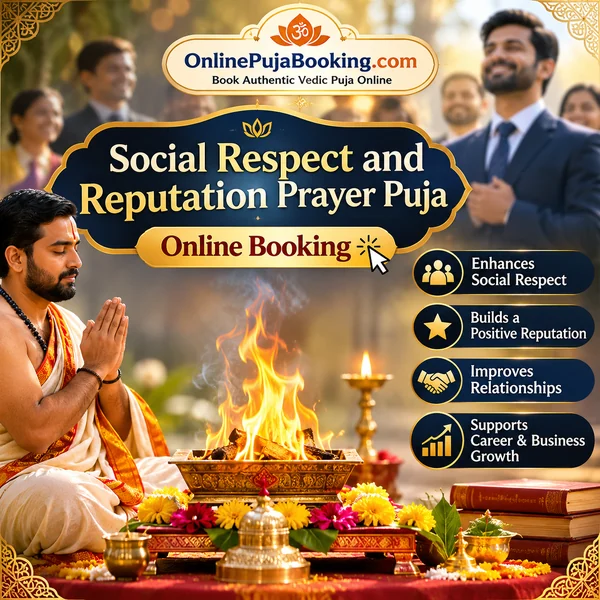


Social Respect and Reputation Prayer Puja Online Booking
Social Respect and Reputation Prayer Puja is a Hindu devotional prayer service for individuals who wish to seek divine blessings for dignity, wisdom, good conduct, and harmonious relationships within their community. It is intended as a spiritual expression of the desire to build a positive reputation through honesty, responsibility, humility, and respectful behaviour.
Unlike established rituals such as Satyanarayan Puja or Rudrabhishek, this name does not refer to one universally prescribed Vedic ceremony. It describes a purpose-based devotional prayer that may be organised using traditional Hindu worship practices. The exact deities, mantras, offerings, and ritual sequence can vary according to the priest, family tradition, and selected package.
Through prayers to Lord Ganesha, Lord Vishnu, and Goddess Saraswati, devotees may express their wishes for clear thinking, wise communication, ethical decisions, and peaceful relationships. The puja is not a guarantee of popularity, professional success, or a particular social outcome. Its central purpose is devotion, reflection, and the intention to follow a respectful and responsible way of life.
Religious and Cultural Significance
In Hindu culture, respect is closely connected with qualities such as truthfulness, self-discipline, compassion, humility, and fulfilling one’s responsibilities. A good reputation is traditionally viewed not simply as public recognition, but as something developed through one’s actions and relationships.
Lord Ganesha is worshipped at the beginning of many Hindu ceremonies as the deity associated with auspicious beginnings, wisdom, and the removal of difficulties in a devotional sense. His worship is appropriate when a devotee wishes to begin a new personal, social, or professional chapter with prayer and a positive intention.
Lord Vishnu is associated with the preservation of dharma, righteousness, and the protection of cosmic order. Devotees may pray to Lord Vishnu for guidance in following ethical principles, maintaining balance, and fulfilling their responsibilities towards family and society.
Goddess Saraswati is traditionally worshipped for knowledge, learning, wisdom, speech, and refined expression. Since respectful communication is important in maintaining healthy social relationships, prayers to Goddess Saraswati may form a meaningful part of this devotional service.
Depending on the family’s tradition, the priest may include prayers to one or more of these deities. The ritual should be understood as a prayer for inner development and goodwill rather than a method of controlling other people’s opinions.
Sanskrit Shloka or Mantra
The following are established devotional mantras suitable for worship associated with Lord Ganesha and Goddess Saraswati. They are presented as mantras, not as quotations from a particular Vedic scripture.
1. Lord Ganesha Mantra
Sanskrit:
ॐ गं गणपतये नमः॥
Roman Transliteration:
Om Gam Ganapataye Namah.
Meaning:
I offer my salutations to Lord Ganesha, the revered deity associated with wisdom, auspicious beginnings, and the overcoming of difficulties.
Relevance to This Puja:
This mantra may be chanted at the beginning of the prayer ceremony. Devotees seek clarity of thought and the wisdom to approach personal and social responsibilities with patience and good judgement.
2. Goddess Saraswati Mantra
Sanskrit:
ॐ ऐं सरस्वत्यै नमः॥
Roman Transliteration:
Om Aim Saraswatyai Namah.
Meaning:
I offer my salutations to Goddess Saraswati, the divine embodiment of knowledge, wisdom, learning, and refined speech.
Relevance to This Puja:
This mantra is particularly relevant to the intention of communicating thoughtfully and respectfully. Devotees may chant it while praying for wisdom, appropriate speech, and the ability to maintain harmonious relationships.
Traditional Purpose and Devotional Benefits
Social Respect and Reputation Prayer Puja is performed with devotional intentions connected with personal character, communication, and relationships. Traditional beliefs associated with this type of prayer include:
- Prayer for Dignity: Seeking divine guidance to conduct oneself with honesty, humility, and self-respect.
- Wisdom in Communication: Praying for thoughtful speech and the ability to express ideas respectfully.
- Positive Relationships: Expressing an intention to maintain goodwill with relatives, colleagues, neighbours, and members of the community.
- Ethical Professional Conduct: Seeking guidance to act responsibly in professional and business matters.
- Confidence and Clarity: Praying for a calm mind and better judgement when dealing with challenging social situations.
- Family Harmony: Seeking blessings for mutual understanding, patience, and respectful behaviour within the family.
- Spiritual Growth: Strengthening devotion and the commitment to follow dharma in everyday life.
These are traditional devotional intentions, not scientifically established effects or guaranteed results. A person’s reputation also depends on consistent actions, honest communication, and how they treat others.
When Is This Puja Performed?
There is no single universally mandatory Hindu tithi or festival specifically prescribed for a Social Respect and Reputation Prayer Puja. Since it is a purpose-based devotional service, devotees may arrange it according to their personal needs and family customs.
Some suitable occasions include:
- Before starting a new professional responsibility or leadership role.
- At the beginning of a business or public-facing venture.
- When seeking spiritual guidance during a period of misunderstandings or strained relationships.
- During personal milestones when devotees wish to pray for wisdom and responsible conduct.
- On a preferred auspicious day selected in consultation with a priest or according to family tradition.
Some families prefer to begin ceremonies on a Wednesday for Lord Ganesha or on a Thursday for Lord Vishnu or Guru-related worship. Such preferences are customary choices, not compulsory rules for this particular service.
The final date and timing should be selected according to the devotee’s preference, the priest’s guidance, and actual service availability.
Who Can Book This Puja?
This devotional service may be relevant to different individuals and families, including:
- Working Professionals: Those who wish to pray for wisdom, responsible conduct, and positive workplace relationships.
- Business Owners: Those seeking divine blessings for ethical business practices, goodwill, and respectful dealings with customers and partners.
- Public-Facing Professionals: Teachers, consultants, community representatives, and other individuals whose work involves regular interaction with people.
- Families: Those who wish to pray for harmony, mutual respect, and a positive family environment.
- Individuals Facing Misunderstandings: Devotees who wish to seek spiritual strength and guidance during difficult social situations.
- Young Adults: Those entering a new educational, professional, or social environment.
- Anyone Seeking Spiritual Guidance: Individuals who wish to cultivate humility, patience, wisdom, and respectful communication.
There is no general restriction based solely on occupation or social position. Specific customary requirements, if any, should be discussed with the priest before the ceremony.
Puja Vidhi: How the Ritual Is Traditionally Performed
The exact procedure for Social Respect and Reputation Prayer Puja may vary because it is a purpose-based service rather than one fixed, universally standardised Vedic ritual. A priest may adapt the ceremony according to the selected package and the devotee’s family tradition.
A customary format may include the following steps:
1. Preparation of the Puja Space
The worship area is cleaned and arranged respectfully. A puja platform or altar may be prepared with images or idols of the selected deities. Flowers, lamps, incense, and other customary materials are arranged.
2. Achamana and Initial Prayers
The priest may perform achamana and offer initial prayers for purity and concentration. The ceremony may begin with a prayer to Lord Ganesha, seeking blessings for an auspicious beginning.
3. Sankalpa
The devotee or the priest takes a sankalpa, which is a formal statement of devotional intention. The devotee’s name and other customary details may be included. The sankalpa may express the intention to cultivate dignity, wisdom, good conduct, and harmonious relationships.
4. Kalasha Sthapana (If Included)
A kalasha may be established according to the selected ritual tradition. It represents an auspicious sacred presence and is used in many Hindu ceremonies. This step is included only when appropriate to the chosen puja format.
5. Deity Invocation and Worship
Lord Ganesha, Lord Vishnu, and Goddess Saraswati may be worshipped according to the priest’s selected procedure. Offerings such as flowers, sandalwood paste, incense, and lamps may be presented with devotional prayers.
6. Mantra Jaap
The priest may chant the relevant mantras, including the Ganapati mantra and Saraswati mantra. Vishnu prayers may also be included where appropriate. The number of repetitions depends on the selected package and ritual plan.
7. Pushpa and Naivedya Offering
Flowers and suitable food offerings may be presented to the deities. The devotee may pray for wisdom, patience, integrity, and the ability to maintain positive relationships.
8. Aarti and Prarthana
The ceremony may conclude with aarti and personal prayers. Devotees may express gratitude and seek blessings to follow a path of honesty, humility, and dharma.
9. Prasad Distribution and Completion
Prasad may be distributed among participants according to custom. The priest completes the ceremony with customary concluding prayers.
The steps above are an indicative format. The actual procedure, mantra count, deity selection, and duration should be confirmed for the selected package.
Puja Samagri
Commonly used materials for a simple form of this devotional ceremony may include:
- Images or idols of the selected deities.
- A puja chowki or clean worship platform.
- Flowers and flower garlands.
- Fresh fruits and suitable naivedya.
- Incense sticks and dhoop.
- Ghee or oil lamp with cotton wicks.
- Kumkum, haldi, and sandalwood paste.
- Akshata (rice grains used in worship).
- Betel leaves and betel nuts, where customary.
- A kalasha and clean water, if included.
- Camphor for aarti.
- Prasad ingredients, as required by the selected ritual.
The exact samagri list may differ according to the priest’s tradition and the selected puja package. Customers should confirm whether the materials are included or need to be arranged separately before booking.
Why Book Through OnlinePujaBooking.com?
Arranging a religious ceremony involves choosing a suitable date, understanding the ritual requirements, and coordinating the necessary arrangements. OnlinePujaBooking.com provides an online platform through which devotees can explore the relevant puja service and review its booking details.
Convenient Online Booking: Explore the service without needing to begin the process through an in-person visit.
Review Package Details: Check the available information about the ritual, its inclusions, and any optional arrangements before proceeding.
Preferred Date Selection: Share your preferred date and request the service according to your schedule. The date remains subject to confirmation.
Clear Communication: Provide the necessary details and clarify questions about the ritual, samagri, duration, and arrangements.
Respect for Religious Traditions: The service description is intended to explain the devotional purpose while recognising that Hindu customs and ritual methods can differ.
Booking Confirmation: Review the service arrangements and receive confirmation before treating the booking as final.
The platform does not represent that a particular social or professional outcome will follow from performing the puja.
How to Book Social Respect and Reputation Prayer Puja Online
Booking this devotional service through OnlinePujaBooking.com can be approached through the following steps:
Step 1: Explore the Puja Service
Find the Social Respect and Reputation Prayer Puja listing and read its description carefully.
Step 2: Review the Package
Check the available package details, including the proposed ritual format, samagri arrangements, and any optional services.
Step 3: Choose a Preferred Date
Select or request a suitable date based on your schedule and customary preferences. Availability should be confirmed before finalising the booking.
Step 4: Provide Required Details
Enter the requested devotee information, such as name and other details needed for the sankalpa, as specified during booking.
Step 5: Clarify Service Arrangements
Confirm the ceremony format, location or mode of performance, expected duration, and whether puja samagri is included.
Step 6: Confirm Your Booking
Review the information and complete the booking through the available process. Keep the confirmation details for future communication.
Frequently Asked Questions (FAQs)
1. What is Social Respect and Reputation Prayer Puja?
It is a purpose-based Hindu devotional prayer service in which devotees seek divine guidance for dignity, good conduct, wisdom, and harmonious social relationships. It may include worship of Lord Ganesha, Lord Vishnu, and Goddess Saraswati.
2. Which deity is worshipped in this puja?
The deity selection can vary. Lord Ganesha may be worshipped for wisdom and auspicious beginnings, Lord Vishnu for guidance in following dharma, and Goddess Saraswati for knowledge and thoughtful communication.
3. What is the religious significance of this puja?
The ceremony reflects the Hindu emphasis on truthfulness, humility, self-discipline, respectful speech, and responsible behaviour. Devotees perform it as a prayer for guidance in maintaining a dignified and ethical life.
4. What are the traditional devotional benefits?
Devotees may pray for wisdom, confidence, positive relationships, family harmony, responsible professional conduct, and spiritual growth. These are religious intentions rather than guaranteed real-world results.
5. When should I perform this puja?
There is no single compulsory date for this purpose-based prayer. You may request a preferred date and consult the priest about an appropriate day according to your family tradition.
6. Can this puja be arranged at home?
A home ceremony may be possible depending on the service arrangement and selected package. Confirm the location, priest arrangements, and other requirements before booking.
7. Can I book Social Respect and Reputation Prayer Puja online?
Yes. You can explore the service listing on OnlinePujaBooking.com, review the available package details, submit the requested information, and request your preferred date, subject to confirmation.
8. What samagri is required for this puja?
Common materials may include flowers, fruits, incense, a lamp, kumkum, haldi, sandalwood paste, rice, and other customary offerings. The final list depends on the selected ritual format.
9. How long does the puja take?
The duration depends on the number of deities worshipped, the mantra chanting included, and the selected ritual procedure. Confirm the expected duration with the service provider before booking.
10. Can I request a particular date for the puja?
Yes. You may provide your preferred date during the booking process. The requested date should be treated as provisional until the service arrangements are confirmed.
11. What should I confirm before booking?
Check the ritual format, deity selection, expected duration, samagri inclusions, performance location, devotee details required for the sankalpa, and date availability.
12. Does this puja guarantee social respect or a better reputation?
No. A religious ceremony cannot guarantee how other people will think or behave. The puja is a devotional prayer for wisdom and guidance. Respect and reputation are also built through honesty, kindness, responsible actions, and consistent conduct.
Book Social Respect and Reputation Prayer Puja Online
If you wish to pray for wisdom, dignity, positive communication, and harmonious relationships, Social Respect and Reputation Prayer Puja can be a meaningful devotional choice. Explore the service details on OnlinePujaBooking.com, review the available package and ritual arrangements, and request a suitable date for your ceremony. May your prayers inspire truthfulness, humility, understanding, and respect in every area of life.



Reviews
There are no reviews yet.