
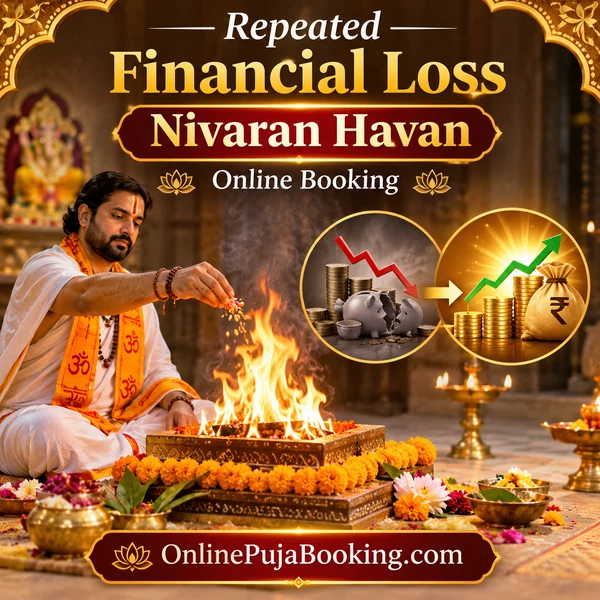

Repeated Financial Loss Nivaran Havan Online Booking
Repeated Financial Loss Nivaran Havan is a devotional Hindu fire ritual performed with prayers for financial stability, responsible prosperity, and peace during periods of recurring monetary difficulties. The ceremony is based on the traditional practice of sankalpa, mantra recitation, worship of deities, and offerings into a consecrated fire.
Financial difficulties can arise for many reasons, including business losses, unexpected expenses, unpaid dues, changing market conditions, or difficult personal circumstances. In Hindu religious traditions, devotees sometimes turn to prayer and havan during challenging periods as an expression of faith, gratitude, and hope.
This havan is intended as a spiritual and religious observance. It does not replace financial planning, professional advice, legal assistance, or practical steps for addressing financial problems. Its purpose is to help devotees approach their circumstances with devotion and a prayerful mindset.
Religious and Cultural Significance
Fire rituals, commonly known as havan or homa, hold an important place in Hindu religious practice. Agni is traditionally regarded as the sacred medium through which offerings are made during a Vedic fire ceremony. Mantras are recited while selected offerings are placed into the fire according to the ritual procedure.
A Repeated Financial Loss Nivaran Havan is generally a purpose-oriented ritual rather than one universally fixed ceremony found in every Hindu tradition. Its exact form may depend on the performing priest, regional customs, family tradition, and the devotee’s sankalpa.
The following deities may be worshipped according to the selected ritual:
- Lord Ganesha: Worshipped at the beginning of many Hindu ceremonies. Devotees pray to Ganesha for wisdom, discernment, and the removal of obstacles.
- Goddess Lakshmi: Revered as the goddess associated with prosperity, abundance, and auspiciousness. Devotees seek her blessings for responsible prosperity and household well-being.
- Lord Vishnu: Worshipped as the preserver and protector in Hindu tradition. Devotees may pray for stability, balance, and the well-being of their families.
- Lord Kubera: Traditionally associated with wealth and guardianship of treasures. Some prosperity-oriented puja traditions include Kubera worship.
Not every performance includes all four deities. The actual deity selection and mantras should be confirmed according to the chosen ritual arrangement.
Sanskrit Shloka or Mantra
The following are established devotional mantras that may be used in an appropriate form of Ganesha and Lakshmi worship. They are presented as mantras, not as quotations from a particular Vedic scripture.
1. Shri Ganesha Mantra
Sanskrit:
ॐ गं गणपतये नमः॥
Roman Transliteration:
Om Gam Ganapataye Namah.
Meaning:
Salutations to Lord Ganesha, the revered remover of obstacles and source of wisdom.
Relevance to This Havan:
Ganesha is traditionally worshipped at the beginning of Hindu rituals. Devotees may recite this mantra while praying for clarity, sound judgement, and the ability to face financial challenges thoughtfully.
2. Shri Mahalakshmi Mantra
Sanskrit:
ॐ श्रीं महालक्ष्म्यै नमः॥
Roman Transliteration:
Om Shreem Mahalakshmyai Namah.
Meaning:
Salutations to Goddess Mahalakshmi, who is worshipped as the divine embodiment of prosperity and auspiciousness.
Relevance to This Havan:
Devotees may recite this mantra during Lakshmi worship as a prayer for household well-being, responsible prosperity, and financial stability. It is a devotional expression rather than a promise of monetary gain.
Traditional Purpose and Devotional Benefits
According to Hindu devotional beliefs, this havan may be performed with the following intentions:
- Prayer for Financial Stability: Devotees seek divine blessings for greater stability in household and business finances.
- Wisdom in Financial Decisions: Prayers to Lord Ganesha express the intention to develop clarity, patience, and thoughtful judgement.
- Prosperity and Auspiciousness: Worship of Goddess Lakshmi is traditionally associated with abundance, harmony, and responsible prosperity.
- Business Well-being: Business owners may perform the ritual as a prayer for steady progress, ethical conduct, and favourable circumstances.
- Peace During Financial Difficulties: The ceremony provides a devotional setting for expressing concerns and seeking spiritual strength.
- Responsible Wealth Management: Devotees may use the occasion to renew their commitment to careful spending, savings, and financial discipline.
- Family Well-being: Families may pray for stability, cooperation, and peace while dealing with monetary challenges.
These are traditional religious intentions and beliefs. The havan cannot guarantee profit, repayment of debt, recovery of lost money, business success, or the removal of financial difficulties.
When Is This Puja Performed?
There is no single universally mandatory date for Repeated Financial Loss Nivaran Havan. The date may be selected according to the devotee’s preference, family tradition, and the priest’s guidance.
Some devotees prefer to arrange prosperity-related worship on:
- Friday: Traditionally associated with Goddess Lakshmi worship in many Hindu households.
- Akshaya Tritiya: An auspicious occasion associated with prosperity and new beginnings.
- Diwali: A major festival during which Lakshmi and Ganesha worship is widely performed.
- Dhanteras: Traditionally associated with prosperity, well-being, and auspicious purchases.
- Purnima: A full-moon day observed for various forms of worship and religious activities.
- A Suitable Muhurat: A date and time selected with guidance from a priest according to the family’s tradition.
These are possible occasions, not compulsory requirements. Devotees facing an immediate concern may request a suitable date without waiting for a particular festival.
Who Can Book This Puja?
Repeated Financial Loss Nivaran Havan may be relevant for:
- Business Owners: Individuals experiencing repeated business setbacks or uncertainty in their commercial activities.
- Shopkeepers and Traders: People seeking prayers for stability, responsible growth, and better business management.
- Working Professionals: Individuals facing financial pressure or repeated unexpected expenses.
- Families: Households experiencing ongoing financial stress and wishing to pray for peace and stability.
- Entrepreneurs: People starting a new venture or navigating difficult financial circumstances.
- Individuals Managing Debt: Devotees who wish to perform a religious observance while taking practical steps towards responsible debt management.
The ritual may be booked by an individual or on behalf of a family or business, subject to the selected package and ritual arrangements.
Puja Vidhi: How the Ritual Is Traditionally Performed
The precise procedure for this purpose-oriented havan can vary. The following is a general overview of a possible ceremony, not a compulsory sequence for every tradition.
Step 1: Preparation of the Puja Space
The place of worship is cleaned and prepared. A havan kund is arranged in a suitable location, and the required puja materials are assembled.
Step 2: Sankalpa
The devotee or yajman takes a sankalpa, expressing the purpose of the ceremony. The intention may include prayers for financial stability, business well-being, wisdom, and peace in the family.
Step 3: Ganesh Puja
Lord Ganesha is worshipped at the beginning of the ceremony. Offerings such as flowers, durva grass, fruits, and other customary items may be presented according to the tradition.
Step 4: Kalash Sthapana
Where included in the selected vidhi, a kalash is established as part of the ritual arrangement. Prayers are offered for auspiciousness and purity.
Step 5: Worship of the Selected Deity
The priest performs the prescribed worship of Goddess Lakshmi, Lord Vishnu, Lord Kubera, or other deities selected for the ceremony. The choice depends on the ritual tradition and sankalpa.
Step 6: Mantra Recitation
Relevant devotional mantras are recited. These may include Ganesha and Lakshmi mantras or other mantras selected by the priest.
Step 7: Havan and Offerings
The sacred fire is prepared and offerings are made while the appropriate mantras are recited. Common offerings may include ghee, havan samagri, herbs, grains, and other materials prescribed for the particular ritual.
Step 8: Purnahuti
The ceremony may conclude with purnahuti, the final offering into the sacred fire. Prayers are offered for peace, auspiciousness, and the well-being of the devotee’s family or business.
Step 9: Aarti and Prasad
Where customary, the ceremony concludes with aarti, prayers, and distribution of prasad.
The actual procedure, mantra count, duration, and deity worship may vary according to the priest, regional custom, and selected package.
Puja Samagri
Commonly used materials for a prosperity-oriented havan may include:
- Havan kund
- Havan wood or approved fuel
- Ghee
- Havan samagri
- Rice and whole grains
- Flowers and garlands
- Kumkum and turmeric
- Sandalwood paste
- Betel leaves and betel nuts
- Fruits and seasonal offerings
- Kalash and clean water
- Cotton wicks and diya
- Camphor
- Incense sticks
- Coconut
- Sweets or other customary naivedya
Additional materials may be required depending on the selected deity worship and ritual procedure.
Please Note: The exact samagri list may vary. Before booking, confirm whether puja materials, havan arrangements, and other requirements are included in your selected package or need to be arranged separately.
Why Book Through OnlinePujaBooking.com?
Arranging a religious ceremony involves several details, including the preferred date, ritual requirements, samagri, and service arrangements. OnlinePujaBooking.com provides an online platform through which devotees can explore puja services and submit booking enquiries conveniently.
When considering this havan, customers can:
- Explore the service details before making a booking request.
- Review the available package information and inclusions.
- Request a preferred date for the ceremony.
- Share the devotee’s name and other required sankalpa details.
- Clarify whether the puja will be performed at home or at another agreed location.
- Confirm samagri arrangements and other service requirements before finalizing the booking.
Our aim is to make the online booking process clear and convenient while respecting the religious significance of the ceremony.
How to Book Repeated Financial Loss Nivaran Havan Online
Follow these practical steps to submit your booking request:
- Visit the Puja Service Page: Open the Repeated Financial Loss Nivaran Havan listing on OnlinePujaBooking.com.
- Review the Package: Read the service description and check the ritual details, inclusions, and any additional requirements.
- Choose Your Preferred Date: Select or request a convenient date, subject to availability and confirmation.
- Provide Required Details: Submit the devotee’s name, contact information, location, and relevant sankalpa details requested during booking.
- Confirm Service Arrangements: Clarify the venue, samagri, ritual procedure, and other package-related details.
- Receive Booking Confirmation: Proceed according to the website’s booking instructions and wait for confirmation of the requested service.
Frequently Asked Questions (FAQs)
1. What is Repeated Financial Loss Nivaran Havan?
It is a devotional Hindu fire ritual performed with prayers for financial stability, prosperity, wisdom, and peace during recurring monetary difficulties. The ceremony may include Ganesha, Lakshmi, Vishnu, or Kubera worship according to the selected tradition.
2. Which deity is worshipped in this havan?
Lord Ganesha and Goddess Lakshmi are commonly relevant to prosperity-oriented worship. Lord Vishnu and Lord Kubera may also be included depending on the ritual procedure. The exact deity selection should be confirmed before booking.
3. What is the religious significance of this havan?
The havan combines sankalpa, mantra recitation, deity worship, and sacred fire offerings. Devotees perform it as an expression of faith and as a prayer for stability, wisdom, and auspiciousness during financially challenging periods.
4. What are the traditional devotional benefits?
Traditional beliefs associate this type of worship with prayers for prosperity, better judgement, household well-being, business stability, and peace of mind. These are devotional intentions, not guaranteed financial results.
5. When should this havan be performed?
It may be arranged on a suitable date selected with guidance from a priest. Friday, Purnima, Akshaya Tritiya, Dhanteras, and Diwali may be considered by devotees, but none is universally compulsory for this specific havan.
6. Can this havan be arranged at home?
A home ceremony may be possible if the selected service supports it and there is a suitable, safe space for the havan. Confirm the location, fire arrangements, and package details before booking.
7. Can I book Repeated Financial Loss Nivaran Havan online?
Yes. You can explore the service listing on OnlinePujaBooking.com, review the package information, request a preferred date, and submit your booking details. The service is subject to availability and confirmation.
8. What samagri is required for the havan?
Common materials include ghee, havan samagri, wood, rice, flowers, fruits, coconut, kalash, incense, and other customary offerings. The final list depends on the selected ritual and should be confirmed with the service provider.
9. How long does the ceremony take?
The duration depends on the number of mantras, deity worship, havan offerings, and the selected procedure. Ask for the estimated duration when confirming your package.
10. Can I request a preferred puja date?
Yes. You may submit your preferred date during the booking process. The date and time will need to be checked and confirmed according to service availability and the ritual arrangements.
11. What details should I confirm before booking?
Confirm the package inclusions, deity worship, mantra recitation, estimated duration, samagri arrangements, venue, preferred date, and any additional requirements. Also clarify whether the devotee needs to participate in person.
12. Does this havan guarantee recovery of lost money or financial success?
No. A religious havan cannot guarantee recovery of money, business profits, debt clearance, or any particular financial result. It is a devotional ceremony performed with prayers for stability, wisdom, and well-being. Practical financial planning and professional guidance remain important.
Book Repeated Financial Loss Nivaran Havan Online
If you or your family are experiencing recurring financial difficulties, you may choose to perform Repeated Financial Loss Nivaran Havan as a devotional prayer for stability, wisdom, and peace. Explore the available service details on OnlinePujaBooking.com, review the package inclusions, and request your preferred date. Confirm the ritual procedure, samagri arrangements, and service availability before completing your booking. May your prayers inspire clarity, patience, responsible decisions, and well-being for your family.


Reviews
There are no reviews yet.