
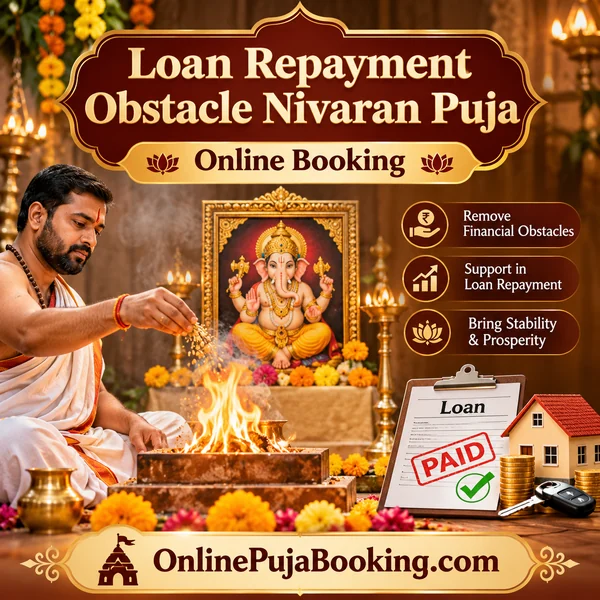
Loan Repayment Obstacle Nivaran Puja Online Booking
Loan Repayment Obstacle Nivaran Puja is a devotional Hindu worship service intended for individuals and families who are experiencing difficulty managing loans, outstanding dues, or financial responsibilities. The puja offers an opportunity to pray for wisdom, patience, discipline, and the strength to work steadily towards repayment.
The name describes a purpose-based devotional service rather than one universally standardised Vedic ceremony. Its exact form can differ according to the priest, family tradition, regional practice, and selected package. A priest may incorporate worship of Lord Ganesha, Goddess Lakshmi, Lord Hanuman, or Mangala (Mars), along with suitable mantra recitation and a personal sankalpa.
The puja should be understood as spiritual support, not a substitute for financial planning, communication with lenders, or professional financial advice.
Religious and Cultural Significance
In Hindu devotional traditions, financial wellbeing is often associated with responsible conduct, effort, prosperity, and divine grace. Different deities represent different aspects of this prayer:
- Lord Ganesha: Worshipped at the beginning of many auspicious undertakings. Devotees pray to him for wisdom and the removal of impediments.
- Goddess Lakshmi: Revered as the goddess of prosperity and auspiciousness. Her worship may express a prayer for responsible use of resources and household wellbeing.
- Lord Hanuman: Devotees seek his blessings for courage, perseverance, devotion, and the strength to face difficult circumstances.
- Mangala (Mars): In Hindu astrology, Mangala is associated with courage, energy, and determination. Some devotional traditions include Mangala prayers or the Rin Mochan Mangal Stotra when praying about debt.
The term Rin Mochan means release from debt or indebtedness. In devotional practice, prayers associated with debt relief express a hope for better circumstances and the ability to fulfil financial obligations. The ritual does not mean that a loan will automatically be cancelled or that a lender will waive repayment.
Sanskrit Shloka or Mantra
The following established mantras may be included when appropriate to the priest’s chosen ritual. They are devotional mantras, not a claim that one particular scriptural ceremony is mandatory for every debt-related puja.
1. Ganesh Mantra
Sanskrit:
ॐ गं गणपतये नमः॥
Roman Transliteration:
Om Gam Ganapataye Namah.
Meaning:
Salutations to Lord Ganesha, who is worshipped for wisdom, auspicious beginnings, and the removal of obstacles.
Relevance to this puja:
Financial difficulties can involve complicated decisions and responsibilities. Devotees may recite this mantra as a prayer for clear thinking, patience, and the ability to approach repayment challenges constructively.
2. Mangala Mantra
Sanskrit:
ॐ क्रां क्रीं क्रौं सः भौमाय नमः॥
Roman Transliteration:
Om Kraam Kreem Kraum Sah Bhaumaya Namah.
Meaning:
Salutations to Mangala, also known as Bhauma or Mars, in the Hindu astrological tradition.
Relevance to this puja:
Some traditions include Mangala worship and the Rin Mochan Mangal Stotra in prayers concerning debt. This mantra may be recited as part of a Mangala-focused devotional observance when appropriate to the priest’s tradition. Its inclusion is not compulsory in every version of the puja.
Traditional Purpose and Devotional Benefits
Devotees may undertake Loan Repayment Obstacle Nivaran Puja with the following spiritual intentions:
- 🙏 Prayer for financial clarity: Seeking wisdom when reviewing expenses, obligations, and repayment priorities.
- 🪔 Strength during financial pressure: Praying for patience and courage during a demanding period.
- 📿 Responsible financial conduct: Seeking the discipline to manage money carefully and meet commitments.
- 🌺 Prosperity and household wellbeing: Offering prayers to Goddess Lakshmi for auspiciousness and responsible prosperity.
- 🐚 Removal of perceived obstacles: Seeking Lord Ganesha’s blessings before taking constructive steps.
- 🔱 Determination and perseverance: Praying for strength to continue working towards financial goals.
- 🤝 Peace within the family: Seeking harmony and understanding when debt-related stress affects household relationships.
These are traditional devotional intentions and beliefs. They are not scientifically established effects or guaranteed financial outcomes.
When Is This Puja Performed?
There is no single universally mandatory date or tithi for a purpose-based Loan Repayment Obstacle Nivaran Puja.
A devotee may request it when:
- Beginning a structured effort to repay outstanding loans.
- Facing a period of financial pressure or unexpected expenses.
- Starting a new financial year or reviewing household responsibilities.
- Seeking spiritual support before making an important financial decision.
- Observing a personal sankalpa for financial discipline and stability.
Some families prefer a Tuesday for Hanuman or Mangala-related worship. Others may select a Wednesday for Lord Ganesha or a Friday for Goddess Lakshmi. These preferences vary by regional and family tradition. A suitable date and time can be discussed with the priest when arranging the service.
Who Can Book This Puja?
This puja may be relevant to:
- Individuals with personal loans: Those who wish to pray for discipline and progress in managing repayments.
- Home loan borrowers: Families carrying long-term housing loan responsibilities.
- Business owners: Entrepreneurs managing business loans, working capital, or outstanding payments.
- Families with multiple financial commitments: Households seeking spiritual encouragement and peace of mind.
- People facing repayment delays: Devotees who wish to make a fresh sankalpa towards meeting their obligations.
- Couples and family members: Those who want to participate together in prayers for responsible financial management.
There is no general requirement that a person must have a particular loan amount or financial status to participate. The sankalpa can be adapted to the devotee’s circumstances without publicly disclosing sensitive financial information.
Puja Vidhi: How the Ritual Is Traditionally Performed
The precise procedure depends on the selected package and the priest’s tradition. A purpose-based puja may include some or all of the following steps:
1. Preparation and purification
The worship area is cleaned and prepared. The priest arranges the required images or idols, kalash, lamps, flowers, and other ritual materials. Devotees may bathe and wear clean clothes before participating.
2. Sankalpa
The devotee or the person arranging the puja takes a sankalpa, stating the intention of the worship. For this service, the prayer may be for financial clarity, repayment discipline, perseverance, and the ability to fulfil debts responsibly.
3. Ganesh Puja
Lord Ganesha is worshipped at the beginning of the ceremony. Offerings and mantra recitation may be made according to the selected vidhi.
4. Kalash and introductory prayers
Where included in the chosen procedure, the priest performs kalash sthapana and invokes divine blessings for the worship. The exact form varies by tradition.
5. Main deity worship
The priest performs the principal worship selected for the package. This may include Ganesh Puja, Lakshmi Puja, Hanuman Puja, or Mangala worship. Not every package necessarily includes all these deities.
6. Mantra Jaap or Stotra Path
The priest may recite relevant mantras or devotional texts. If a Mangala-focused procedure is selected, the Rin Mochan Mangal Stotra may be included according to the priest’s tradition.
7. Havan, if included
Some packages may include a havan. The priest offers appropriate samagri into the sacred fire while reciting the prescribed mantras. A havan should be considered included only if it is clearly stated in the package.
8. Aarti and Prarthana
The ceremony concludes with aarti and prayers for wisdom, stability, courage, and the wellbeing of the devotee’s family.
9. Purnahuti and blessings
If a havan is performed, purnahuti may be offered at its conclusion. The priest then gives blessings and explains any customary concluding observances.
The procedure may differ according to regional custom, sampradaya, priest, and package selection. Customers should check the exact included rituals before booking.
Puja Samagri
Common materials used in a Ganesh, Lakshmi, Hanuman, or Mangala-oriented puja may include:
- Flowers and garlands.
- Fresh fruits and seasonal offerings.
- Kumkum, haldi, chandan, and akshata.
- Incense sticks and dhoop.
- Ghee or oil diya and cotton wicks.
- Betel leaves and supari, where customary.
- Coconut and kalash.
- Panchamrit ingredients, if required.
- Modak or other suitable naivedya for Ganesh Puja.
- Sweets or other traditional bhog offerings.
- Mantra or stotra text for the selected recitation.
- Havan samagri, ghee, and wood, if havan is part of the package.
The exact list depends on the chosen deity and ritual. Please confirm whether samagri, havan arrangements, and offerings are included in your selected booking package or need to be arranged separately.
Why Book Through OnlinePujaBooking.com?
Arranging a religious ceremony can involve several details, including the preferred date, ritual type, samagri, location, and participation requirements. OnlinePujaBooking.com provides a convenient way to explore the puja service and communicate your booking preferences.
Before confirming your request, review the package description carefully. Check whether the service includes only puja and mantra recitation or also includes a havan, specific stotra path, samagri, and other arrangements.
You can communicate your preferred date and relevant service requirements through the available booking process. Any special request should be discussed and confirmed before the ceremony is arranged.
The aim is to make the booking process straightforward while respecting the religious significance of the ritual. The puja is a devotional observance; financial decisions and repayment arrangements remain the responsibility of the borrower.
How to Book Loan Repayment Obstacle Nivaran Puja Online
Follow these practical steps to request your puja service:
- Explore the service: Find Loan Repayment Obstacle Nivaran Puja on OnlinePujaBooking.com and read its description.
- Review package details: Check the included worship, mantra recitation, havan, samagri, and other stated arrangements.
- Choose a preferred date: Select your requested date and provide any timing preference available.
- Enter booking details: Share the required contact information and the details requested for the sankalpa.
- Discuss special requirements: Communicate any preference regarding the deity, stotra path, or ritual format before confirmation.
- Confirm your booking: Review the service arrangements and proceed according to the booking instructions.
Frequently Asked Questions (FAQs)
1. What is Loan Repayment Obstacle Nivaran Puja?
It is a purpose-based Hindu devotional service for people experiencing loan repayment difficulties or financial pressure. It may include prayers to Lord Ganesha, Goddess Lakshmi, Hanuman, or Mangala, depending on the selected ritual format.
2. Which deity is worshipped in this puja?
The deity selection depends on the priest and package. Lord Ganesha is commonly worshipped for wisdom and the removal of obstacles. Goddess Lakshmi is worshipped for prosperity, while Hanuman or Mangala may be included in certain debt-related devotional traditions.
3. Is this puja the same as Rin Mochan Mangal Puja?
Not necessarily. Rin Mochan Mangal refers to devotional practices associated with Mangala and prayers for release from indebtedness. Loan Repayment Obstacle Nivaran Puja is a broader service description and may use a different combination of prayers. Confirm the exact procedure before booking.
4. What are the traditional devotional benefits?
Devotees traditionally pray for courage, financial discipline, wise decisions, perseverance, and household peace. These are spiritual intentions, not guaranteed financial results.
5. When should I perform this puja?
There is no universally compulsory date. A devotee may request it when facing repayment challenges or beginning a fresh financial plan. Tuesday, Wednesday, or Friday may be preferred according to the deity and family tradition.
6. Can this puja be arranged at home?
The ritual may be arranged at home if the selected service supports a home ceremony and the necessary arrangements are available. Confirm the location and service details before booking.
7. Can I book Loan Repayment Obstacle Nivaran Puja online?
Yes. You can explore the service and submit a booking request through OnlinePujaBooking.com. The preferred date and other arrangements should be confirmed through the booking process.
8. What samagri is required?
Flowers, fruits, diya, incense, kumkum, haldi, coconut, and deity-specific offerings may be used. Havan materials are needed only if a havan is included. Check the selected package to confirm samagri arrangements.
9. How long does the puja take?
The duration depends on the selected procedure, number of mantras, stotra recitation, and whether a havan is included. Confirm the expected duration with the service provider before booking.
10. Can I request a preferred date?
You may submit your preferred date while booking. It should be treated as a request until availability and arrangements have been confirmed.
11. Do I need to share my loan amount or bank details?
A devotee generally does not need to disclose bank account numbers, passwords, or confidential financial documents for a devotional puja. Share only the information required for the booking and the agreed sankalpa.
12. Does this puja guarantee loan repayment or debt clearance?
No. A puja cannot guarantee loan approval, debt cancellation, repayment, or a change in financial circumstances. It is a devotional practice intended to provide spiritual encouragement. Continue communicating with lenders and seek qualified financial guidance where needed.
Book Loan Repayment Obstacle Nivaran Puja Online
If you wish to seek divine blessings while working responsibly towards your financial commitments, explore Loan Repayment Obstacle Nivaran Puja through OnlinePujaBooking.com. Review the available ritual details, check the package inclusions, and submit your preferred date. May your prayers inspire patience, clarity, courage, and responsible action on the path towards financial stability.

Reviews
There are no reviews yet.