
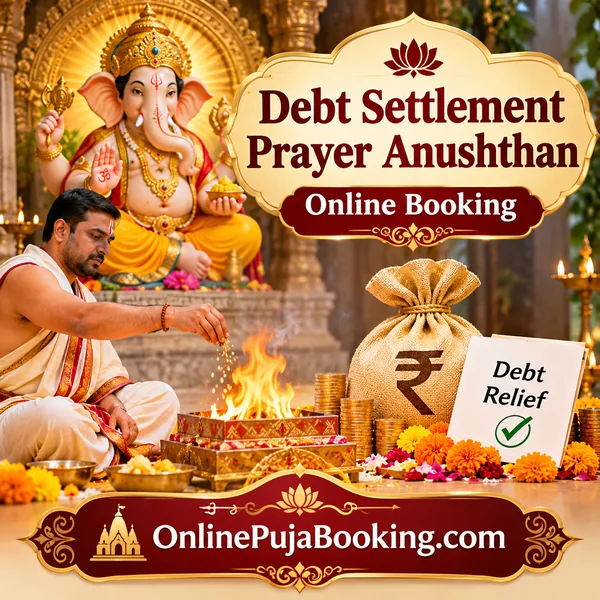

Debt Settlement Prayer Anushthan Online Booking
Debt Settlement Prayer Anushthan is a Hindu devotional ritual performed with prayers for financial stability, responsible money management, prosperity, and the ability to overcome financial difficulties. It is intended for devotees who are dealing with outstanding loans, business liabilities, repayment pressure, or other financial responsibilities and wish to seek divine blessings through traditional worship.
The ritual may include the worship of Lord Ganesha, Goddess Lakshmi, and Lord Vishnu. The exact deities, mantras, offerings, and ritual sequence depend on the devotee’s intention, family tradition, and the priest’s selected method of worship.
Through OnlinePujaBooking.com, devotees can explore Debt Settlement Prayer Anushthan online booking and review the available service arrangements before requesting a preferred date.
Religious and Cultural Significance
In Hindu tradition, financial well-being is often associated with dharma, discipline, thoughtful decisions, honest work, and divine grace. Wealth is not viewed only as the accumulation of money; responsible use of resources, fulfilling obligations, supporting one’s family, and maintaining ethical conduct are also important aspects of a balanced life.
Debt can create emotional and practical pressure for individuals and families. A devotional anushthan offers an opportunity to pause, make a sincere sankalp, pray for clarity, and renew one’s commitment to responsible financial conduct.
Different deities represent different spiritual qualities relevant to this intention:
- Lord Ganesha: Worshipped as Vighnaharta, the remover of obstacles and the deity associated with wisdom and auspicious beginnings.
- Goddess Lakshmi: Revered as the goddess of wealth, abundance, prosperity, and well-being.
- Lord Vishnu: Worshipped as the preserver and protector, associated with balance, righteousness, and stability.
- Lord Hanuman: In some devotional traditions, worshipped for courage, strength, determination, and protection during difficult circumstances.
There is no single universally prescribed Vedic ritual called Debt Settlement Prayer Anushthan. The name describes a devotional service whose specific procedure may be designed around the devotee’s sankalp and the chosen religious tradition.
It is important to understand that this puja is a spiritual practice, not a financial or legal debt settlement procedure. It does not cancel loans, change repayment agreements, or replace communication with lenders.
Sanskrit Shloka or Mantra
The following established mantras are suitable for devotional worship of Lord Ganesha and Goddess Lakshmi.
1. Lord Ganesha Mantra
Sanskrit:
ॐ गं गणपतये नमः॥
Roman Transliteration:
Om Gam Ganapataye Namah.
Meaning:
Salutations to Lord Ganesha, the divine remover of obstacles and the source of wisdom.
Relevance to This Anushthan:
Lord Ganesha is traditionally worshipped at the beginning of religious ceremonies and important undertakings. Devotees may chant this mantra while praying for clear thinking, patience, and the ability to approach financial responsibilities wisely.
2. Goddess Lakshmi Mantra
Sanskrit:
ॐ श्रीं महालक्ष्म्यै नमः॥
Roman Transliteration:
Om Shreem Mahalakshmyai Namah.
Meaning:
Salutations to Goddess Mahalakshmi, the divine source of prosperity, abundance, and auspiciousness.
Relevance to This Anushthan:
Devotees chant this mantra while praying for financial well-being, stability, responsible prosperity, and the wisdom to use available resources appropriately.
The number of repetitions and the method of chanting may vary according to the priest’s guidance and the selected anushthan.
Traditional Purpose and Devotional Benefits
Debt Settlement Prayer Anushthan is performed with devotional intentions rather than as a guarantee of financial results.
Traditional intentions associated with this type of worship include:
- Prayer for Financial Stability: Seeking divine blessings for a more balanced and stable financial life.
- Wisdom in Financial Decisions: Praying for clarity when making decisions about loans, expenses, savings, and financial commitments.
- Strength During Difficulties: Seeking courage and patience while dealing with repayment responsibilities.
- Responsible Prosperity: Offering prayers for opportunities to earn through honest work and ethical business practices.
- Family Peace: Seeking harmony and emotional strength when financial pressure affects family life.
- Removal of Obstacles: Worshipping Lord Ganesha with the traditional intention of overcoming difficulties in important undertakings.
- Gratitude and Positive Sankalp: Renewing one’s commitment to discipline, responsibility, and thoughtful financial planning.
These are traditional devotional intentions. The ritual should not be understood as a scientifically proven financial remedy or a promise that debts will be eliminated.
When Is This Puja Performed?
Debt Settlement Prayer Anushthan does not have one universally mandatory date or tithi.
Devotees may arrange the ritual according to their personal circumstances, family traditions, and the priest’s guidance.
Some commonly considered occasions include:
- Wednesday: Traditionally associated with Lord Ganesha in many regional devotional practices.
- Friday: Commonly associated with worship of Goddess Lakshmi.
- Thursday: Considered suitable for worship of Lord Vishnu and other forms of Guru-related devotion in many traditions.
- Ekadashi: A significant fasting and worship day associated with Lord Vishnu.
- Purnima: A full-moon day observed for various forms of devotional worship.
- Personal Sankalp Day: A date selected by the devotee for a prayer related to financial responsibilities.
The suitability of a date depends on the particular ritual method. Devotees can request a preferred date and confirm arrangements before booking.
Who Can Book This Puja?
Debt Settlement Prayer Anushthan may be relevant for:
- Individuals managing personal loans or other financial obligations.
- Families experiencing financial pressure and seeking peace and stability.
- Business owners dealing with outstanding business liabilities.
- Traders and self-employed professionals praying for responsible financial growth.
- Individuals wishing to improve their financial discipline and decision-making.
- Devotees seeking spiritual support during a challenging financial period.
A family member may also arrange this prayer on behalf of another person, according to the priest’s guidance and the family’s religious customs.
There is no requirement that a devotee must belong to a particular profession or financial category to participate in a prayer for stability and responsible prosperity.
Puja Vidhi: How the Ritual Is Traditionally Performed
The exact procedure for Debt Settlement Prayer Anushthan may vary. The following is a general outline of a possible devotional arrangement, not a mandatory procedure followed by every Hindu tradition.
Step 1: Preparation and Purification
The worship area is cleaned and prepared. The priest and participants may perform customary purification practices before beginning the ritual.
Step 2: Sankalp
The devotee makes a sincere religious resolution, known as sankalp. The prayer may express the intention to develop financial discipline, fulfil obligations responsibly, and seek divine guidance during financial difficulties.
Personal financial information need not be publicly announced during the ritual.
Step 3: Ganesh Puja
The ceremony may begin with the worship of Lord Ganesha. Flowers, durva grass, incense, and other customary offerings may be presented according to the chosen tradition.
The Ganesh mantra may be chanted as part of the opening worship.
Step 4: Lakshmi Puja
Goddess Lakshmi may be worshipped with flowers, lamps, sweets, and traditional offerings. Devotees pray for prosperity, wise use of resources, and stability in household or business finances.
Step 5: Vishnu Puja
Where included, Lord Vishnu is worshipped with traditional offerings and devotional prayers. The worship may emphasize righteousness, balance, patience, and the fulfilment of responsibilities.
Step 6: Mantra Jaap
The selected deity mantras are chanted according to the priest’s guidance. Repetition counts and the choice of mantra depend on the ritual tradition and package.
Step 7: Havan (If Included)
If the selected package includes a havan, the priest prepares the sacred fire and offers suitable materials while reciting the prescribed mantras. A havan is not automatically included in every version of this anushthan.
Step 8: Aarti and Prarthana
The ceremony may conclude with aarti and prayers for wisdom, peace, financial responsibility, and family well-being.
Step 9: Purnahuti and Ashirwad
Where a havan is performed, purnahuti may mark its conclusion. The priest may offer blessings and explain any customary concluding practices.
The sequence, duration, and offerings can differ by regional custom, sampradaya, priest, and selected package.
Puja Samagri
Common materials that may be used, depending on the selected ritual, include:
- Ganesh and Lakshmi idols or photographs.
- Flowers and flower garlands.
- Durva grass for Lord Ganesha, where prescribed.
- Kumkum, turmeric, sandalwood paste, and akshat.
- Incense sticks and dhoop.
- Ghee and cotton wicks for lamps.
- Fruits and traditional sweets.
- Betel leaves and betel nuts.
- Kalash and clean water.
- Panchamrit ingredients, if required.
- Havan kund and havan samagri, if the package includes a havan.
- Offerings prescribed by the priest.
The exact samagri list depends on the chosen ritual. Customers should confirm whether the materials are included in their selected package or need to be arranged separately.
Why Book Through OnlinePujaBooking.com?
Arranging a traditional puja involves understanding the ritual, selecting a suitable date, and confirming the service requirements. OnlinePujaBooking.com provides an online platform where devotees can explore the Debt Settlement Prayer Anushthan service and review its available booking details.
Customers can:
- Explore the puja service without needing to arrange every detail in person initially.
- Review the package description and available inclusions.
- Request a preferred date for the ceremony.
- Communicate relevant details about the intended sankalp.
- Confirm whether the service includes mantra jaap, havan, samagri, or other ritual components.
- Clarify the arrangements before completing the booking.
The service details, date availability, location or online arrangements, and package inclusions should be confirmed before payment or final booking.
How to Book Debt Settlement Prayer Anushthan Online
Follow these practical steps to request your puja booking:
- Visit OnlinePujaBooking.com: Find the Debt Settlement Prayer Anushthan service.
- Review the Package: Read the description carefully and check the ritual components and inclusions.
- Choose Your Preferred Date: Select or request a suitable date according to your preference.
- Provide Booking Details: Share the required contact information and relevant details requested for the ceremony.
- Confirm Service Arrangements: Check the puja procedure, samagri, location or online format, and any additional requirements.
- Complete the Booking: Follow the booking instructions and retain the confirmation details.
If you have a specific religious tradition or preferred deity, communicate this before finalizing the arrangements.
Frequently Asked Questions (FAQs)
1. What is Debt Settlement Prayer Anushthan?
Debt Settlement Prayer Anushthan is a devotional Hindu ritual performed with prayers for financial stability, wisdom, discipline, and strength while managing outstanding financial obligations. It may include worship of Lord Ganesha, Goddess Lakshmi, and Lord Vishnu, depending on the selected ritual method.
2. Which deity is worshipped in this anushthan?
Lord Ganesha and Goddess Lakshmi are commonly relevant to prayers for wisdom and prosperity. Lord Vishnu may also be worshipped for balance and stability. The exact deities depend on the priest’s chosen procedure and the devotee’s sankalp.
3. What is the religious significance of this puja?
The ritual reflects the traditional Hindu belief that financial well-being should be accompanied by dharma, responsible conduct, wisdom, and gratitude. Devotees perform it to seek divine blessings while making sincere efforts to fulfil their financial responsibilities.
4. What are the traditional devotional benefits?
Devotees may pray for financial discipline, clearer decision-making, courage during difficult circumstances, family peace, and opportunities for responsible prosperity. These are devotional intentions, not guaranteed financial outcomes.
5. When should Debt Settlement Prayer Anushthan be performed?
There is no single compulsory date. Wednesday, Friday, Thursday, Ekadashi, or Purnima may be considered according to the selected deity and family tradition. The preferred date can be discussed with the priest.
6. Can this puja be arranged at home?
Yes, the ritual may be arranged at home if the selected service supports a home ceremony and the necessary arrangements can be made. Confirm the location and service availability before booking.
7. Can I book Debt Settlement Prayer Anushthan online?
You can explore the service through OnlinePujaBooking.com, review the available package information, request a preferred date, and communicate the details required for booking confirmation.
8. What samagri is required for this puja?
Common materials may include flowers, fruits, incense, ghee, lamps, kumkum, turmeric, and deity offerings. Havan materials are needed only if a havan is included. The exact list should be confirmed with the selected package.
9. How long does the anushthan take?
The duration depends on the number of mantras, the selected deities, and whether a havan is included. A simple puja may take less time than an extended mantra jaap or havan. Confirm the expected duration before booking.
10. Can I request a preferred puja date?
Yes, you may request your preferred date during the booking process. The date should be treated as a request until the service arrangements and availability are confirmed.
11. What should I confirm before booking?
Confirm the selected deities, ritual procedure, expected duration, mantra jaap count if applicable, havan inclusion, samagri arrangements, ceremony location or online format, and final booking details.
12. Does this puja guarantee that my debts will be settled?
No. Hindu devotional rituals do not guarantee loan cancellation, debt reduction, repayment approval, or a particular financial result. The puja is a spiritual prayer for guidance and strength. Continue to follow your repayment agreements and seek appropriate financial or legal advice when needed.
Book Debt Settlement Prayer Anushthan Online
If you wish to perform Debt Settlement Prayer Anushthan with devotion and a sincere sankalp, explore the available service details at OnlinePujaBooking.com. Review the ritual inclusions, request your preferred date, and confirm the arrangements before booking. May your prayers inspire wisdom, patience, responsible financial decisions, and peace within your family.


Reviews
There are no reviews yet.